All sheets


Nuclear Reactor Types: A Practical Reference
Every reactor is a bet on a coolant, a fuel cycle, a regulator, and a decade. This guide catalogs 25 designs across seven classes, from the light-water fleet that makes 9% of world electricity to the fusion approaches chasing first power, with the capex, fuel, and timeline context that decides which of those bets are worth making.
Light-water
the workhorse fleet behind most nuclear power4 designs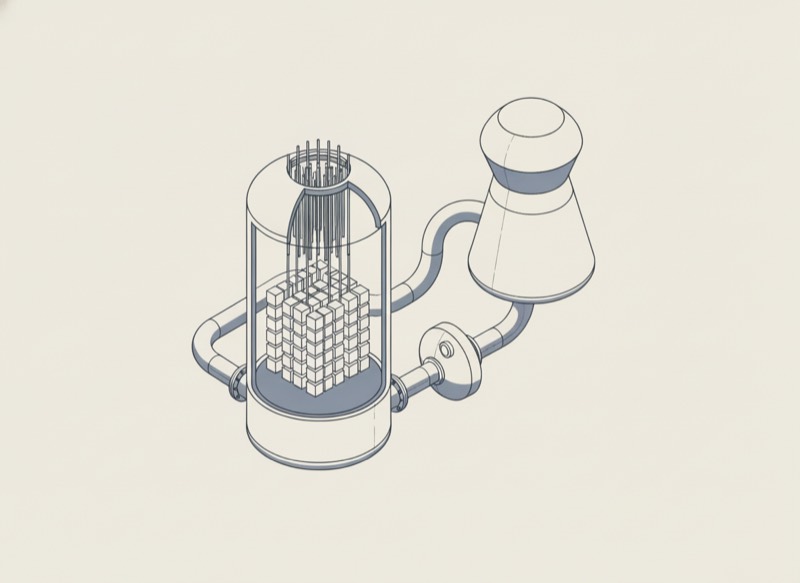
The PWR is the most common reactor on earth, making up ~70% of the world's ~440 power reactors. Ordinary water at 155 bar serves as both coolant and moderator. The pressure keeps it liquid at ~325 °C, and it hands its heat to a separate secondary loop that raises steam, so the two-loop separation keeps radioactivity out of the turbine. The design descends directly from Rickover's naval program. It became dominant because it was first, it was funded, and it has been iterated on endlessly.
Strengths & weaknessesThe PWR has an operating record nothing else comes close to (tens of thousands of reactor-years), a global supply chain, mature regulation, and 90%+ fleet capacity factors in the US. Weaknesses: 155-bar pressure demands massive forgings and containments; ~33% thermal efficiency and ~300 °C output rule out industrial-heat markets; large cores need active safety systems layered in depth; and Western new-builds routinely run far over budget.
VariantsAP1000 (passive safety, Vogtle/China), EPR (Finland, Flamanville, Hinkley, all badly over budget), APR-1400 (Korea's on-budget export), Hualong One (China's serial workhorse).
Default to the PWR for gigawatt-scale baseload on a large grid whenever you have a serial builder (Korea, China, or a committed national program) and state-grade balance sheets. It's the lowest-physics-risk, lowest-regulatory-risk path to nuclear at scale, and it's the right anchor technology for a first-time nuclear nation that wants a proven design with a functioning global fuel market. Look elsewhere if your grid is under ~10 GW, if you need industrial heat above 300 °C, or if the buyer can't carry a $10B+ decade-long project. In those cases light-water SMRs give you the same physics at a financeable size, and HTGRs are the ones that serve the heat market.
Key numbersElectric output 900–1,600 MWe per unit from 2,700–4,600 MWt · light water as both coolant and moderator at 155 bar · outlet around 325 °C for roughly 33% thermal efficiency · UO2 fuel at 3–5% enrichment, 45–55 GWd/t discharge burnup · refueling outage every 12–24 months · overnight capex $2.5–4k/kW in China and Korea, $12–15k/kW in recent Western first-of-a-kind builds.
ExamplesVogtle 3&4 — first US new builds in 30 years, ~$35B for 2.2 GW; Barakah (UAE, four APR-1400s delivered near schedule); China connecting several Hualong Ones yearly; France's 56-reactor fleet.
Economic profileThe same design costs $2.5–4k/kW in China and Korea and $12–15k/kW in recent US/EU FOAK builds. The gap comes from serial execution rather than physics. Fuel comes from a functioning global LEU market (~$5–10/MWh contribution). So the PWR is both the safest bet in nuclear and the reason the SMR and advanced-reactor industry exists at all, since that industry grew up around Western PWR cost problems.
VideosNuclear Power Reactors (World Nuclear Association) · The Future of Nuclear Energy in a Carbon-Constrained World (MIT Energy Initiative)
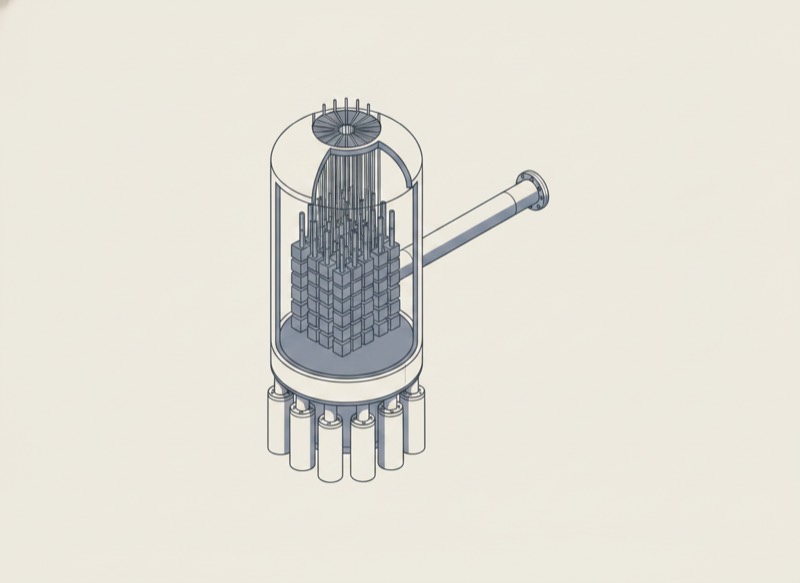
The BWR is a simpler version of the PWR and makes up ~14% of the world fleet. Water boils directly in the core at ~75 bar, and that steam drives the turbine with no secondary loop. You get fewer components, half the pressure, and a bigger vessel. In exchange, the turbine hall becomes mildly radioactive during operation. The design also carries the reputation of Fukushima Daiichi, a 1960s BWR whose station-blackout vulnerability defined the accident.
Strengths & weaknessesThe plant is simpler, with no steam generators (historically the PWR's most troublesome component), lower pressure, and good load-following via recirculation flow. Weaknesses: the radioactive steam path complicates maintenance; the Mark I containment's Fukushima performance drove costly retrofits fleet-wide; and new BWR construction stalled globally for a decade. The design's future now rides almost entirely on its SMR descendant, the BWRX-300.
VariantsGen III design. Four were built in Japan on schedule in the 1990s, which is a largely forgotten proof that nuclear could be built fast.
Fully passive Gen III+ design, licensed but never built.
Choose a BWR today mainly where the lineage already exists: Japanese restarts, life extension of the operating fleet, and jurisdictions with BWR-trained operators and regulators. For new capacity the decision has moved down-market. The BWRX-300 is the live way to buy the design's simplicity, so put it on the shortlist for 300 MW-class grids and coal-site replacements. Don't launch a new full-scale BWR program from scratch; for new large builds a Gen III+ PWR is the default.
Key numbersElectric output 600–1,400 MWe per unit · light water as coolant and moderator, boiling in the core at about 75 bar · saturated steam near 290 °C for roughly 33% thermal efficiency · UO2 fuel at 3–5% enrichment, 45–50 GWd/t discharge burnup · refueling outage every 18–24 months · the BWRX-300 derivative rated at 300 MWe.
Examples~60 operating units across the US, Japan, Sweden, Taiwan (retiring); Japan's post-Fukushima BWR restarts (Onagawa, Shimane); Hitachi-GE and GE Vernova as the surviving vendor line.
Economic profileEconomics are comparable to a PWR, with a somewhat cheaper plant and costlier maintenance logistics. The more interesting part is the lineage. GE Hitachi took the BWR's simplicity argument down to 300 MW as the BWRX-300, currently the West's most-ordered SMR, which puts the old design's economics at a financeable size.
VideosFukushima Daiichi Accident (World Nuclear Association) · BWRX-300 Small Modular Reactor (GE Vernova)
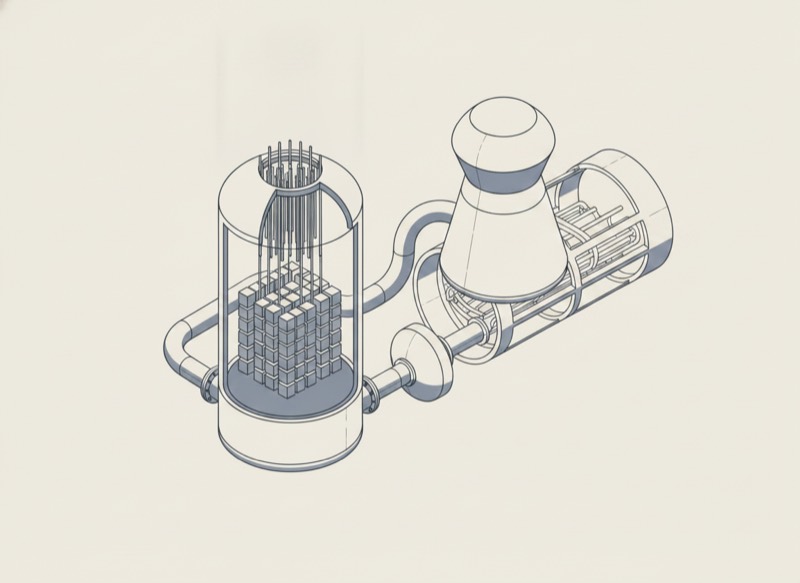
The VVER is Russia's PWR lineage: horizontal steam generators, hexagonal fuel assemblies, and an unbroken design evolution from Soviet VVER-440s to the modern VVER-1200 with passive safety systems. The physics is ordinary PWR physics. The business model is what sets it apart. Rosatom sells the reactor, the financing, the fuel, the operators, and the waste take-back as one state-backed package, which has made the VVER the default reactor of the developing world.
Strengths & weaknessesThe VVER has a long operating record across 30+ countries' worth of units, genuinely competitive delivered cost, and it's the only product offering full-stack financing-to-fuel service. Weaknesses: buying one creates decades of dependency on a sanctioned state; Western fuel alternatives (Westinghouse's VVER fuel) exist but are recent; and geopolitics now hangs over every project. Finland canceled Hanhikivi, while Hungary's Paks II proceeds.
When to useThe VVER is the rational choice if you're a first-time nuclear nation without investment-grade credit and you want a single counterparty for financing, fuel, operations, and waste. That's the buyer profile of Egypt, Bangladesh, and Turkey. Treat the decision as geopolitical before technical: only accept it if six decades of dependency on Moscow is tolerable and sanctions exposure is manageable. If you're a NATO/EU-aligned buyer, or you're otherwise hedging Russia risk, price the APR-1400 as the closest Western analogue on delivered cost. If you already run a VVER fleet, qualifying Westinghouse fuel is the way to reduce the dependency.
Key numbersElectric output 440–1,200 MWe per unit · light water as coolant and moderator at roughly 160 bar · outlet around 320 °C · hexagonal UO2 assemblies at 3–5% enrichment, roughly 50 GWd/t discharge burnup · refueling outage every 12–18 months · export price around $5–6k/kW with Rosatom state financing.
ExamplesVVER-1200s operating at Novovoronezh and Leningrad; export builds at Akkuyu (Turkey, four units), El Dabaa (Egypt), Rooppur (Bangladesh), Kudankulam (India), Tianwan (China); ~20 units in Rosatom's export book.
Economic profileQuoted export prices run ~$5–6k/kW with state financing at concessional rates, a package Western vendors structurally cannot match. Rosatom's real product is geopolitical lock-in: 60-year relationships covering fuel, service, and spent-fuel return. For market analysis, treat the VVER as the pricing floor and the diplomatic competitor that every Western SMR export campaign is really up against.
VideosNuclear Power in Russia (World Nuclear Association) · VVER Working Group Design Comparison Report (OECD-NEA MDEP)
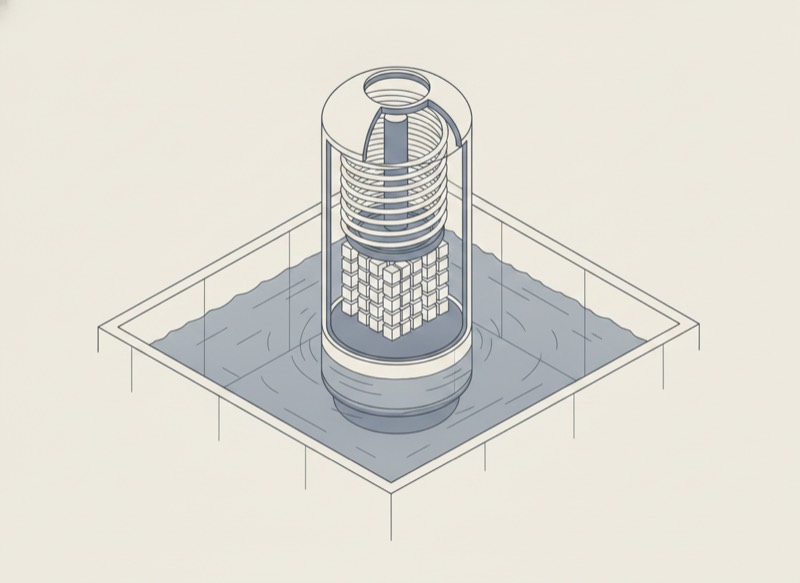
Light-water SMRs are a bet that nuclear's cost problem comes from construction rather than physics. You shrink a proven light-water reactor to 50–470 MWe, build most of it in a factory, integrate components into one vessel (steam generators inside, in NuScale's case), and use passive safety to shrink the emergency planning zone. The physics is deliberately boring (LEU fuel, water coolant, known regulation) so that the whole innovation budget goes to manufacturability and financing size.
Strengths & weaknessesUnit size is financeable at ~$2–5B rather than $15–35B, decay-heat removal is passive, siting is flexible (retiring coal plants included), and the regulatory path reuses six decades of LWR precedent. Weaknesses: small reactors give up economies of scale, so per-kW costs are structurally higher until factory volume compensates, and that requires an order book nobody has yet. NuScale's Utah project died at ~$20k/kW, and the "modular" savings are still a projection rather than measured data.
VariantsBoiling-water simplicity at 300 MW. It's under construction at Darlington (Ontario), which makes it the West's SMR frontrunner, with TVA and Poland following.
77 MW integral PWR modules; first NRC-certified SMR design; post-Utah pivot to RoPower (Romania) and data-center deals.
Rolls-Royce SMR (UK, 470 MW), Holtec SMR-300 (Palisades site), CAREM (Argentina), ACP100/Linglong One (China, under construction since 2021).
Choose a light-water SMR when your binding constraint is financing size or grid size rather than $/MWh. That covers utilities that can't carry a $15–35B single-asset risk, 300 MW-class grids, coal-site conversions with transmission already in place, and data-center offtakers paying a premium for firm power on a date. Prefer designs with concentrated order books (BWRX-300 today), because the whole thesis rests on the manufacturing learning curve, and an orphan design gives you small-reactor costs without the volume that pays for them. If you can finance a full-size PWR from a serial builder, do that instead; it beats any FOAK SMR on cost per kW.
Key numbersElectric output 50–470 MWe per module · light water as coolant and moderator · outlet around 300 °C · UO2 fuel below 5% enrichment · refueling every 18–24 months · $2–5B per unit instead of $15–35B for a full-size plant · overnight capex $4–6k/kW claimed at NOAK, $8–15k/kW realistic for first-of-a-kind.
ExamplesDarlington's four-unit BWRX-300 program (first concrete 2025), Linglong One nearing completion at Changjiang, TVA Clinch River, Amazon/X-energy and Google/Kairos-style hyperscaler offtakes reshaping demand.
Economic profileVendors pitch $4–6k/kW at NOAK; realistic FOAK expectations are $8–15k. The math only works if one design wins enough repeat orders to move down a manufacturing learning curve, so order-book concentration (Ontario + TVA + Poland on BWRX-300) matters more than design elegance. Data-center power purchase agreements at premium prices are the demand shock that may finally fund the first fleet.
VideosThe NEA Small Modular Reactor Dashboard, Third Edition (OECD-NEA) · Small Nuclear Power Reactors (World Nuclear Association)
Heavy-water
natural-uranium fuel with online refueling1 design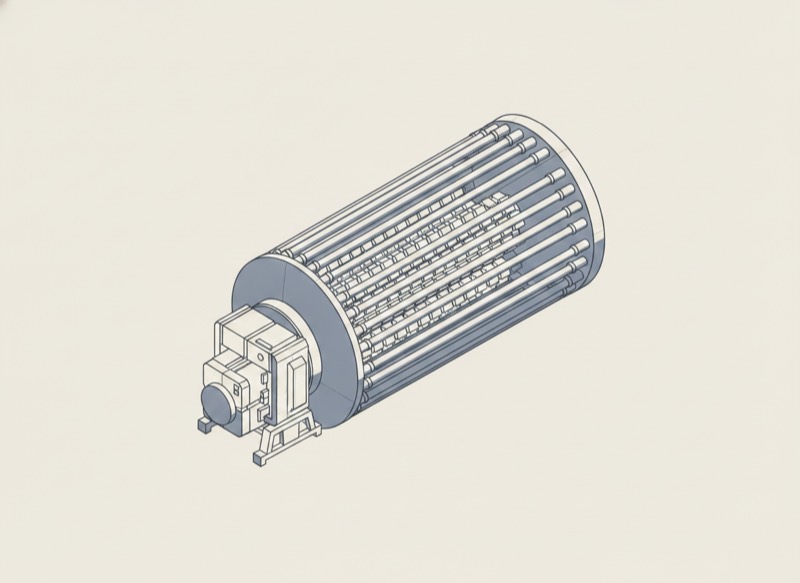
The PHWR was Canada's answer to enrichment scarcity. It moderates with heavy water (D2O), which absorbs so few neutrons that natural, unenriched uranium sustains the chain reaction. The fuel sits in hundreds of horizontal pressure tubes rather than one massive vessel, which allows on-power refueling, so CANDUs never stop to swap fuel. India imported the design in the 1960s and industrialized the same lineage into its indigenous PHWR fleet.
Strengths & weaknessesThere's no enrichment dependency (energy sovereignty was the point), on-power refueling keeps availability high, pressure-tube construction avoids giant forgings, and the neutron economy is good enough to burn thorium blends or recycled uranium. Weaknesses: heavy water costs hundreds of millions per plant; pressure tubes embrittle and require mid-life retubing (~$10B-class refurbishments); tritium production has to be managed; and that same good neutron economy is proliferation-relevant, since India's 1974 test traced back to a CANDU-lineage research reactor.
When to useChoose a PHWR if enrichment independence is a strategic requirement, since the design runs on natural uranium from any supplier. It also makes sense wherever the CANDU industrial base already exists (Canada, India, Romania, Argentina), where refurbishments and India's 700 MWe builds are proven, competitively priced work. It's the practical route to burning recycled uranium or thorium blends without new reactor physics. If you don't have a sovereignty argument or a heavy-water supply chain, default to the PWR and its larger vendor ecosystem. And whatever you do, make any PHWR business case carry mid-life retubing as a second capital project.
Key numbersElectric output 220–900 MWe per unit · heavy water as both coolant and moderator, roughly 100 bar inside the pressure tubes · outlet around 310 °C · natural uranium UO2 bundles at 0.71%, discharge burnup roughly 7 GWd/t · on-power refueling, so no refueling outage · overnight capex $2–3k/kW on India's 700 MWe builds, plus mid-life retubing as a second capital project.
ExamplesOntario's Bruce, Darlington, and Pickering fleets (mid-refurbishment through the 2030s); India's 22-unit PHWR fleet and its 700 MWe standardized builds; Qinshan (China), Cernavodă (Romania, units 3–4 revival), Embalse (Argentina).
Economic profileIndia builds 700 MWe PHWRs at roughly $2–3k/kW, which is among the cheapest credible nuclear anywhere. Canadian refurbishments have lately run on time and on budget, which is rare for Western nuclear execution. New CANDU sales stalled for decades, but AtkinsRéalis's MONARK 1,000 MWe pitch and Ontario's momentum give the lineage its first real revival window since the 1990s.
VideosThe Essential CANDU Textbook (UNENE) · Nuclear Power in Canada (World Nuclear Association)
Graphite-moderated
early designs that ran on natural uranium2 designs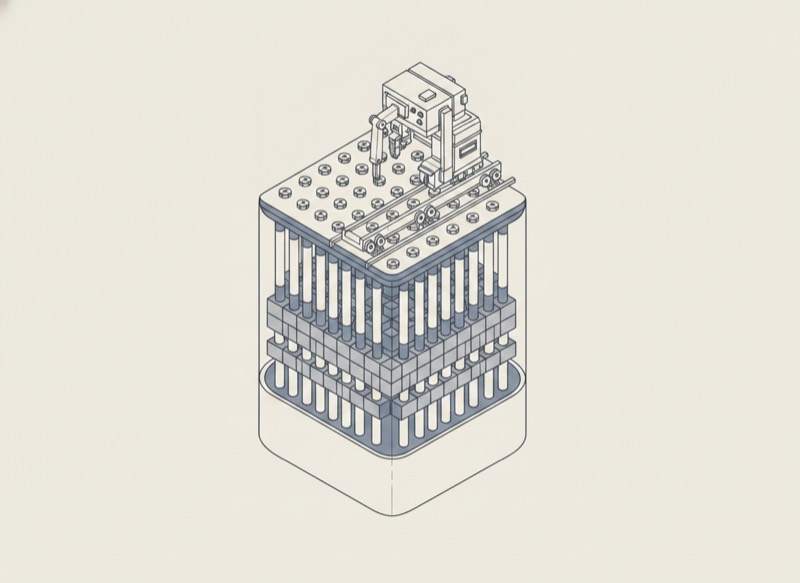
The RBMK is the Soviet graphite-moderated, water-cooled channel reactor, and it's Chernobyl's design. It was built for cheap plutonium-compatible scale using pressure tubes and no containment. Two design choices caused the 1986 accident: a positive void coefficient (boiling coolant raised reactivity instead of suppressing it) and control rods whose graphite tips briefly added reactivity on insertion. Together they turned a test into the worst reactor accident in history. Post-Chernobyl modifications removed the worst characteristics.
Strengths & weaknessesThe RBMK offered on-power refueling, no enrichment-heavy fuel demands, and no giant pressure vessel, so it was cheap and scalable, which is why 17 were built. Weaknesses: the void coefficient and scram behavior made it unusually unforgiving; graphite fires spread contamination in a way water reactors can't; there's no containment; and the design can't be licensed anywhere outside its legacy fleet. It's the textbook case of physics choices setting up an institutional catastrophe.
When to useThere's no deployment case. The design can't be licensed outside its legacy Russian fleet, and it exits with the 2030s retirements. Today it's useful mainly as a reference point: it's the benchmark that every "inherent safety" claim gets priced against, and the case study in how a positive void coefficient compounds with institutional secrecy. If you actually want a channel-type reactor with on-power refueling, look at the CANDU lineage instead.
Key numbersElectric output 1,000 MWe per unit from 3,200 MWt, and 1,500 MWe at Ignalina · light water coolant boiling in pressure tubes at about 70 bar, graphite moderator · outlet around 284 °C for roughly 31% thermal efficiency · UO2 fuel at 2–2.8% enrichment · on-power refueling, and no containment building · 7 units still operating, all retiring through the 2030s.
ExamplesChernobyl (all units closed, 1986–2000); Leningrad, Kursk, and Smolensk units in Russia — seven still operating with lifetime extensions, retiring through the 2030s as VVER-1200s replace them.
Economic profileThe RBMK has no commercial future, so its relevance is analytical. It's the cautionary entry in any reactor comparison: a design that was cheap because it gave up safety margin, run by an institution that couldn't admit the flaw. Every modern "inherent safety" pitch (passive decay heat, negative coefficients everywhere) is implicitly priced against this history.
VideosRBMK Reactors (World Nuclear Association) · Chernobyl Accident (World Nuclear Association)
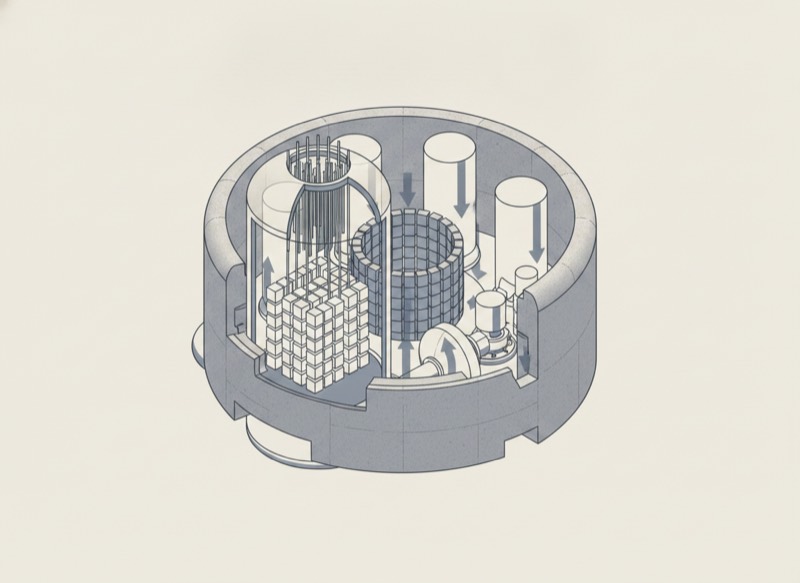
Britain took a different path from the rest of the world: CO2-cooled, graphite-moderated reactors. Magnox (1956's Calder Hall, the world's first commercial nuclear power) ran natural uranium in magnesium-alloy cladding. The Advanced Gas-cooled Reactor (AGR) followed with enriched oxide fuel at 640 °C gas temperature. AGRs are still the highest-temperature power reactors ever fleet-operated, and they reach ~41% thermal efficiency, which no LWR matches. The lineage died because nothing was standardized: every AGR station was practically a prototype.
Strengths & weaknessesThe lineage delivered high efficiency, on-load refueling (Magnox), benign coolant chemistry, and real engineering achievement in graphite-core longevity. Weaknesses: cores and civil works were enormous per MW; each of the seven AGR stations differed enough to give up any series learning; graphite ages unpredictably, which ended up setting fleet lifetimes; and Magnox's dual civil-military plutonium role tangled the program politically. The UK eventually gave up and bought a PWR (Sizewell B).
When to useThere's no new-build case. What's left is practical experience in decommissioning program management and the graphite-aging dataset the NDA effort generates at scale. If you're doing HTGR diligence, treat the AGR as the null hypothesis: 640 °C gas-cooled reactors were fleet-operated for decades and still lost on economics, so any modern high-temperature-gas pitch has to explain what breaks that precedent beyond TRISO fuel and factory build. If you want high-temperature gas output today, evaluate pebble-bed HTGRs instead.
Key numbersMagnox 50–490 MWe per unit, AGR roughly 600 MWe per reactor · CO2 coolant with a graphite moderator · outlet about 400 °C on Magnox and 640 °C on AGR · AGR thermal efficiency around 41%, against ~33% for a light-water reactor · Magnox burned natural uranium metal in magnesium-alloy cladding, AGR enriched UO2 at 2.5–3.5% · 26 Magnox units and 7 AGR stations built, all retired or retiring by about 2030.
ExamplesCalder Hall (1956–2003), the 26-unit Magnox fleet (all retired; Wylfa last, 2015); seven AGR stations (Hinkley B, Hunterston, Torness…) retiring through ~2028–30; decommissioning managed by the NDA at multi-decade, multi-£10B scale.
Economic profileThe program shows how not to build a fleet: one country, one technology, zero standardization. The AGR's 640 °C output is exactly what today's HTGR ventures promise, which is a reminder that high-temperature gas reactors aren't new physics and that their historic failure was economic. The UK's decommissioning bill is the long tail every national program should price in.
VideosNuclear Development in the United Kingdom (World Nuclear Association) · Nuclear Decommissioning Authority (GOV.UK)
High-temperature gas
meltdown-proof cores that sell process heat2 designs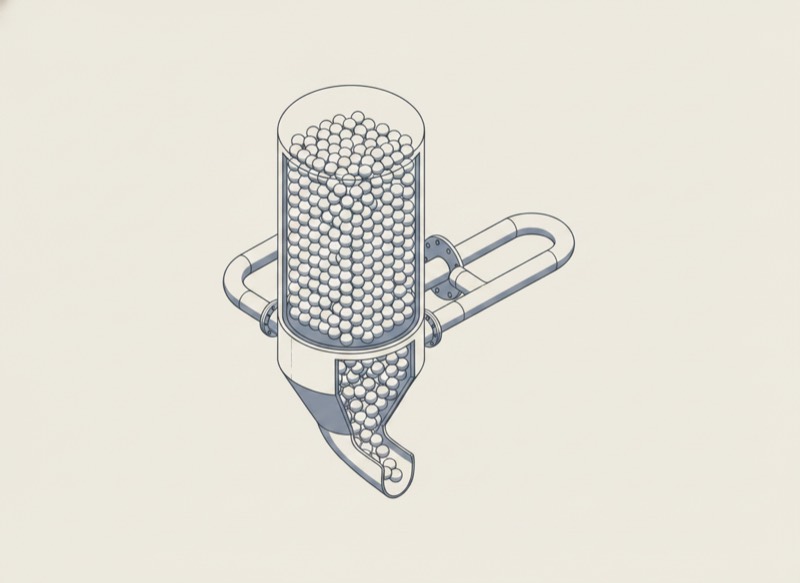
The core is made of about 420,000 billiard-ball fuel pebbles, each containing thousands of TRISO particles (poppy-seed-sized uranium kernels wrapped in ceramic layers that retain fission products to 1,600 °C+). Helium coolant exits at 750 °C+. The physics is meltdown-proof in a literal sense: power density is low enough and temperature margins high enough that a core losing all cooling just cools down, which test reactors have demonstrated on camera. Pebbles circulate continuously, so the reactor refuels on-line.
Strengths & weaknessesThis is the strongest inherent-safety story in fission, it produces high-grade heat for industry and hydrogen, and the TRISO fuel acts as its own containment. Weaknesses: energy density is very low, so cores and vessels are huge per MW; TRISO fabrication is expensive and only now scaling in the West; helium leaks through everything; pebble flow and dust caused real trouble in Germany's AVR/THTR (shut down after mechanical and political failures); and HALEU dependence gates every Western project.
When to useChoose a pebble-bed HTGR when your product is heat rather than electricity: 550–750 °C heat for chemicals, refining, synfuels, or hydrogen, sold to a creditworthy industrial or hyperscaler offtaker who values the walk-away safety case for close-in siting. If emergency-planning-zone size is what decides whether you can get a site, this is the right pick. It's the wrong tool for merchant bulk power, where the energy-density penalty makes LWRs cheaper per kW. Any Western schedule depends on HALEU and TRISO supply, so secure the fuel line before you commit to offtake dates.
Key numbersThermal output 200–250 MWt per module for 80–105 MWe · helium coolant with a graphite moderator · outlet 750 °C, raising steam at 550–566 °C for roughly 40% thermal efficiency · TRISO fuel in 60 mm pebbles at 8.5–15.5% enrichment, fission products retained above 1,600 °C · discharge burnup roughly 90–160 GWd/t · around 420,000 pebbles in a 250 MWt core, circulated and refueled on-line.
ExamplesChina's HTR-PM at Shidaowan — twin 250 MWt pebble beds, grid-connected 2021, full power 2022: the world's first operating Gen-IV plant, with follow-on HTR-PM600 planned. X-energy's Xe-100 (80 MWe, quad-packs) backed by Amazon and Dow for the Seadrift chemical plant; Germany's AVR/THTR as the instructive ancestors.
Economic profileHTR-PM's FOAK cost ran well above Chinese PWRs, so the safety case doesn't come cheap yet. The Western thesis (X-energy) sells what PWRs can't: 565 °C steam and process heat up to 750 °C for chemicals, refining, and data-center campuses, sold via corporate offtakes rather than merchant power. TRISO fuel lines (X-energy's TF3, BWXT) are as much of a moat as the reactor itself.
VideosTRISO Particles: The Most Robust Nuclear Fuel on Earth (US Department of Energy) · Xe-100 Reactor Design (X-energy)
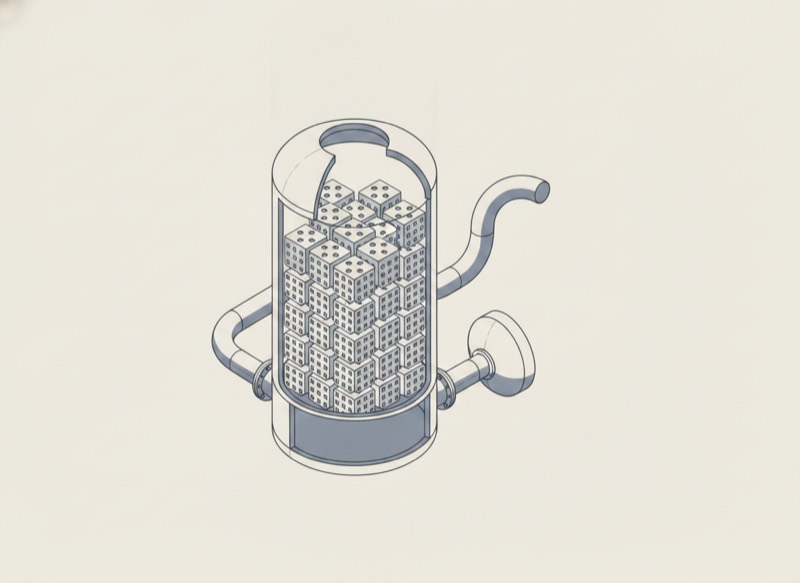
Prismatic HTGRs use the same TRISO fuel and helium coolant as the pebble bed, but the particles are pressed into compacts and stacked in hexagonal graphite blocks, so the core is fixed and machined rather than flowing. You give up the pebble bed's on-line refueling and get precise core geometry, higher achievable outlet temperatures (Japan's HTTR has run 950 °C, hot enough for thermochemical hydrogen), and none of the pebble-flow and dust issues.
Strengths & weaknessesThese are the highest demonstrated outlet temperatures in fission, the core mechanics are well characterized, and you get the same walk-away TRISO safety case. Weaknesses: batch refueling requires complex block shuffling; graphite blocks cost money to machine and replace; power density and big-vessel economics are as bad as in any HTGR; and the commercial bench is thinner than the pebble-bed camp's. The design's fifty-year history (Peach Bottom, Fort St. Vrain's troubled run, GA's canceled GT-MHR) is full of prototypes and short on fleets.
When to useReach for a prismatic HTGR only when your requirement genuinely exceeds the pebble bed's range: 900–950 °C for sulfur-iodine hydrogen or the hottest process heat. HTTR is the only place in fission where that's been demonstrated. If you're investing, two things have to be true: there's a real market at 950 °C that 750 °C can't serve, and the balance sheet survives years of fuel qualification before revenue (that's the failure mode USNC ran into). For anything at 750 °C and below, the pebble-bed camp has the operating plant, the order book, and the momentum.
Key numbersThermal output 15–600 MWt across built and proposed units, 5–330 MWe · helium coolant with a graphite moderator · outlet 750–950 °C, the highest demonstrated in fission (HTTR held 950 °C for 50 days in 2010) · TRISO compacts stacked in hexagonal graphite blocks, HALEU enrichment · discharge burnup roughly 100 GWd/t · batch refueling on a roughly 18-month cycle, with block shuffling.
ExamplesJapan's HTTR (operating, 950 °C demonstrations, coupled hydrogen-production testing); Fort St. Vrain (US, 1979–89, plagued by water ingress); Ultra Safe Nuclear's MMR (Canadian licensing at Chalk River before the company's 2024 bankruptcy and asset sale); General Atomics' prismatic lineage.
Economic profileCommercially it trails the pebble bed: same heat markets, less momentum. Its one distinctive asset is the 950 °C capability, the only demonstrated fission route to sulfur-iodine hydrogen and the hottest industrial heat. USNC's bankruptcy is the warning for the sector, since TRISO-based microreactor ventures burn capital on fuel qualification long before they see revenue.
VideosHTGR Research and Development — HTTR (JAEA) · Very-High-Temperature Reactor (Generation IV International Forum)
Fast-spectrum
close the fuel cycle and burn spent fuel3 designs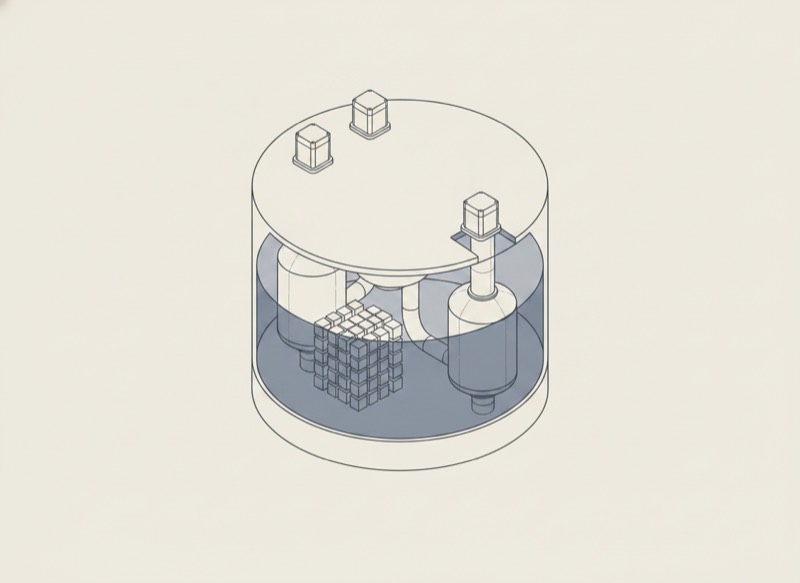
The SFR is the most-built advanced reactor in history. It uses liquid sodium coolant, no moderator, and a fast neutron spectrum that can breed more fuel than it burns or destroy the actinides that make waste long-lived. Sodium transfers heat very well, so cores can be dense, run at atmospheric pressure, and put out 550 °C. Twenty-odd SFRs have operated since 1951, so feasibility was never the problem. What held the technology back was sodium's chemistry, plus breeder economics that cheap uranium made pointless.
Strengths & weaknessesThere's a lot of operating experience here (EBR-II's well-known passive-safety tests, Russia's BN-600/800 running commercially for decades), plus atmospheric pressure, waste transmutation potential, and metal-fuel passive shutdown physics. Weaknesses: sodium burns on contact with air or water, and leaks and fires dogged Monju and Superphénix; the coolant is opaque, which complicates inspection; an intermediate loop adds cost; and breeding start-up cores need plutonium or HALEU in quantities that strain supply.
When to useIf you're a utility, the near-term case is Natrium's specific configuration: a renewable-heavy grid that will pay for storage-backed load-following, in a jurisdiction willing to license sodium. Don't pick it for cheap baseload, where LWRs win. If you're running a state program, choose the SFR when you want fuel-cycle infrastructure (breeding, actinide burning, plutonium management) and the treasury can hold a multi-decade position, as Russia, China, and India do. Either way, treat a secured HALEU or plutonium startup inventory as the gating item, because it's the binding constraint on every Western schedule.
Key numbersElectric output 300–800 MWe per unit, 345 MWe base and 500 MWe peaking on Natrium · liquid sodium coolant at atmospheric pressure, no moderator · outlet 500–550 °C · MOX or metal fuel, needing HALEU up to 19.75% or plutonium · design burnup roughly 100–150 GWd/t, several times what a light-water reactor reaches · breeding ratio around 1.0–1.2 · about 20 units have operated worldwide since 1951.
ExamplesRussia's BN-800 (operating on MOX, the only commercial fast fleet); TerraPower's Natrium (345 MWe, metal fuel, plus a molten-salt heat store for 500 MWe peaking) — construction underway at Kemmerer, Wyoming, targeting ~2030; India's PFBR at Kalpakkam approaching operation; historic Phénix, Superphénix, Monju, EBR-II, FFTF.
Economic profileNatrium is the West's flagship advanced build. Its salt-store peaking design is a genuinely clever answer to renewable-heavy grids, and its HALEU dependence (waived initially via DOE stockpiles) is the weak point in the schedule. Russia and China (CFR-600) treat SFRs as strategic fuel-cycle infrastructure rather than merchant plants, which is a reminder that fast-reactor economics have always been a state's long game rather than a market's.
VideosFast Neutron Reactors (World Nuclear Association) · Sodium Fast Reactor (Generation IV International Forum)
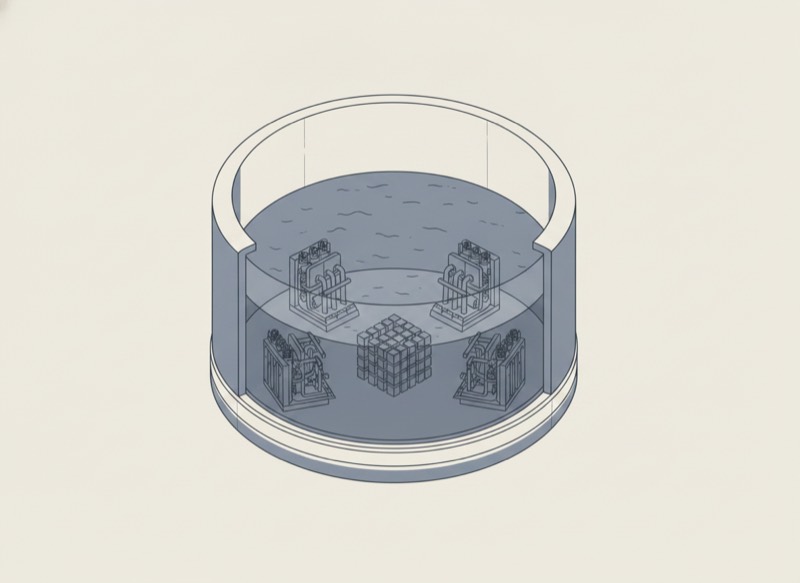
The LFR gives you fast-spectrum physics with a coolant that doesn't burn. Molten lead (or lead-bismuth eutectic) is chemically inert with air and water, boils at 1,749 °C, and shields gamma radiation well enough that the vessel needs less biological shielding. The Soviet Alfa-class submarines ran lead-bismuth reactors in the 1970s, the only LFRs ever operated. They proved the concept and also documented its problems: coolant freezing at 327 °C, polonium-210 activation, and corrosion of the steel.
Strengths & weaknessesThere's no sodium-style fire risk, no intermediate loop is needed, natural circulation is strong enough for passive safety, and the temperature potential is high. Weaknesses: lead corrodes and erodes structural steels unless oxygen chemistry is held in a very narrow window; the coolant freezing solid can destroy the plant; pumps and materials run in territory with almost no civilian operating data; and the submarine heritage is the only heritage there is, which is as much a warning as a validation.
When to useRight now this is an investment thesis rather than something you can buy. Back an LFR if you believe corrosion control in lead is an oxygen-chemistry engineering problem that BREST-OD-300 and loop programs will solve, and you want fast-spectrum benefits without paying for sodium-fire mitigation in the plant. A newcleo-style venture is fundamentally a European plutonium-disposition play, so diligence the fuel-cycle politics as hard as the metallurgy. If you need a fast reactor on a committed schedule, go with sodium instead, since it has the operating fleet and the reactor-years.
Key numbersElectric output 200–300 MWe on current designs, 700 MWt at BREST-OD-300 · molten lead or lead-bismuth coolant at atmospheric pressure, no moderator · lead melts at 327 °C and boils at 1,749 °C · outlet around 535 °C · mixed nitride or MOX fuel carrying plutonium · the only operating history is the Soviet Alfa-class submarine reactors of the 1970s and 1980s.
ExamplesRussia's BREST-OD-300 under construction at Seversk (the world's first purpose-built civilian LFR, tied to an on-site closed fuel-cycle complex); newcleo (UK/France/Italy, lead-cooled mini-reactors with MOX ambitions); Westinghouse's LFR concept; Belgium's MYRRHA accelerator-driven lead-bismuth research machine.
Economic profileThe pitch is SFR benefits without paying for sodium fire protection, in exchange for materials risk that only reactor-years can settle. BREST's completion will be the field's proof point. Private ventures (newcleo has raised close to a billion) are effectively selling European plutonium-disposition policy plus lead physics, so they're fuel-cycle businesses more than reactor businesses.
VideosLead Fast Reactors (Generation IV International Forum) · LFR System Safety Assessment 2020 (GIF Risk and Safety Working Group)
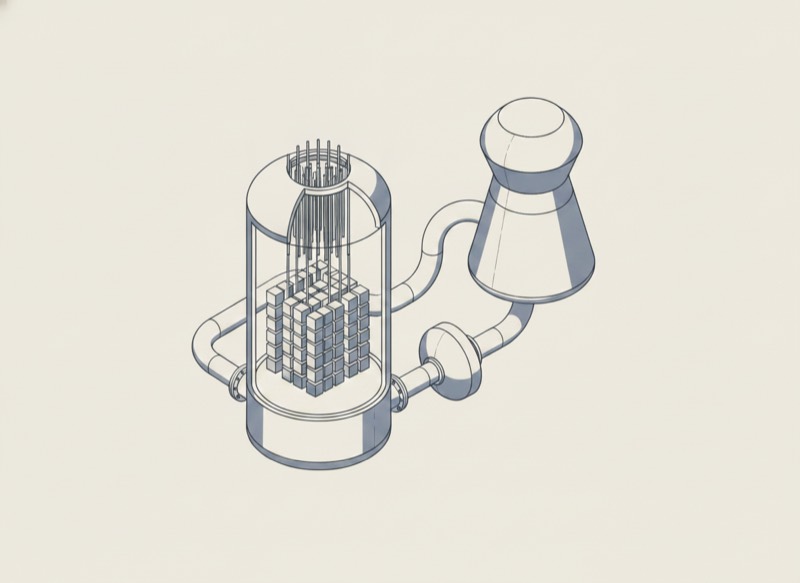
The GFR is the hardest entry on the Gen-IV roadmap. It combines helium coolant (transparent, inert, no activation) with a fast spectrum and an 850 °C outlet, which on paper gives you HTGR temperatures and breeder fuel economy at the same time. The hard part is decay heat. A fast core has high power density and helium has almost no thermal inertia, so losing pressure means losing cooling within seconds. Nobody has solved depressurized decay-heat removal without water or sodium's natural circulation, and design iterations have been trying since the 1960s.
Strengths & weaknessesThe coolant is chemically inert and could drive a direct-cycle turbine, you get the full fast-spectrum fuel-cycle benefits, and there are no sodium fires or lead corrosion to manage. Weaknesses: the decay-heat problem requires either massive passive injection systems or fuel that survives 1,600 °C+ uncooled, which means carbide fuels that barely exist; no GFR has ever been built anywhere; and every practical compromise pushes the design back toward the thermal HTGR it was supposed to beat.
When to useDon't plan deployments or venture bets here. Nothing has ever been built, and depressurized decay-heat removal has beaten sixty years of design iterations. The GFR belongs in a program portfolio only as low-cost research optionality with a defined revisit trigger, and the signal to watch for would be refractory carbide fuels maturing in space-reactor work. If you want fast-spectrum fuel economics, use sodium. If you want high-temperature helium, use a thermal HTGR.
Key numbersReference design 2,400 MWt and roughly 1,200 MWe, with ALLEGRO's 75 MWt demonstrator as the only concrete proposal · helium coolant at about 70 bar, no moderator · outlet 850 °C · refractory carbide fuel in SiC cladding that has to survive above 1,600 °C uncooled · no unit has ever been built.
ExamplesPurely programmatic: Euratom's ALLEGRO demonstrator concept (Czech/Slovak/Hungarian consortium, perpetually pre-decision), historic GA and UK GCFR studies, Gen-IV Forum working groups.
Economic profileThere's no credible commercial vehicle. The GFR survives as a research placeholder for "what if HTGR safety met breeder economics." Its value is as a boundary case: it shows that coolant thermal inertia, rather than design elegance, decides which advanced reactors are buildable. Only watch this space if refractory carbide fuels mature somewhere else (space reactors may qualify them as a side effect).
Further readingMolten salt
liquid fuel at low pressure and high heat4 designs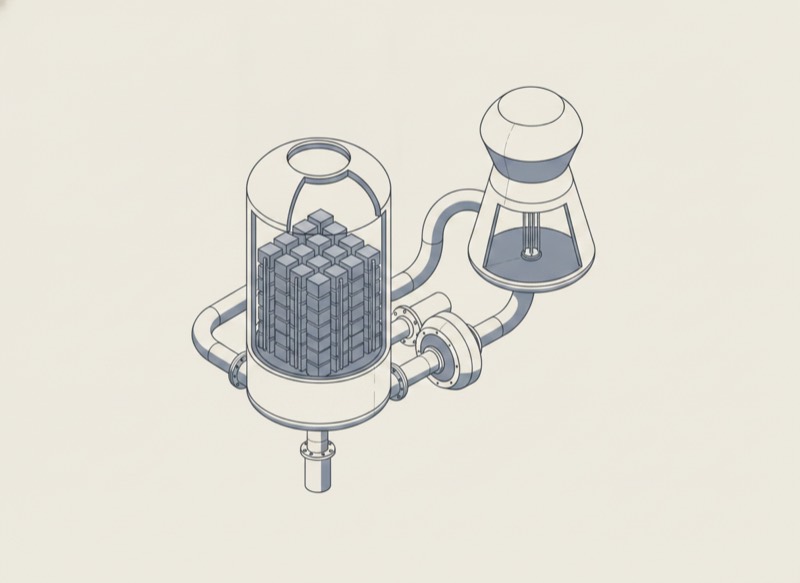
In a thermal MSR the fuel and the coolant are the same liquid: uranium (or thorium) fluorides dissolved in molten salt, circulating through a graphite-moderated core at ~700 °C and atmospheric pressure. Oak Ridge's MSRE proved the concept over four years in the 1960s. Liquid fuel buys you several things at once: no fuel fabrication, on-line refueling and cleanup, a strong negative temperature coefficient, and freeze-plug drain tanks that passively dump the core to safety.
Strengths & weaknessesYou get atmospheric pressure, walk-away drain-tank safety, 700 °C heat, fuel that can't melt down because it's already molten, and unusual fuel-cycle flexibility including thorium. Weaknesses: the salt is very corrosive and radioactive everywhere it flows, so every pump, valve, and heat exchanger becomes a licensed nuclear component; tritium production (from lithium salts) permeates hot metal; off-gas systems have to handle mobile fission products continuously; and graphite lifetime limits core life.
When to useBack a thermal MSR when the thesis is a much cheaper plant (no pressure vessel, no fuel fabrication, 700 °C heat) and the venture has a credible answer to salt chemistry as an operations problem. Today that means an IMSR-style sealed replaceable core, pursued in a jurisdiction like Canada that will engage with novel designs. If you're planning a program, treat China's TMSR line as the pacing demonstration and calibrate your timelines to it. If you need salt-heat revenue this decade, the FHR's solid-fuel compromise is the lower-risk route; liquid fuel pays off more but takes longer.
Key numbersThermal output 2–440 MWt across operating and licensed designs, up to about 195 MWe · fuel and coolant are the same liquid, uranium or thorium fluorides in molten salt, with a graphite moderator · outlet roughly 700 °C at atmospheric pressure · FLiBe carrier salt melts near 460 °C, so the loop has to stay hot · LEU to HALEU at up to 19.75% enrichment, plus thorium blends · on-line refueling and cleanup, with the IMSR core sealed and swapped about every 7 years · MSRE ran about 13,000 hours critical between 1965 and 1969.
ExamplesMSRE (Oak Ridge, 1965–69 — the founding demonstration); China's TMSR-LF1 at Wuwei (2 MWt, achieved criticality 2023 and thorium-in-salt operation — the world's only operating MSR); Terrestrial Energy's IMSR (LEU, sealed replaceable core units, deep into Canadian licensing); Denmark's Copenhagen Atomics and Seaborg pursuing mass-manufactured salt units.
Economic profileThe promise is a cheap plant (no pressure vessel, no fuel fabrication, high-grade heat). The cost is a licensing and materials problem that has taken every MSR venture roughly a decade. China's state program doesn't face Western regulatory economics, and it's now the pacing demonstration. Western ventures live or die on whether "sealed core, swap every 7 years" (IMSR) convinces regulators to treat salt chemistry as an operations problem rather than a design-basis one.
VideosMolten Salt Reactors (World Nuclear Association) · Molten Salt Reactor Program (Oak Ridge National Laboratory)
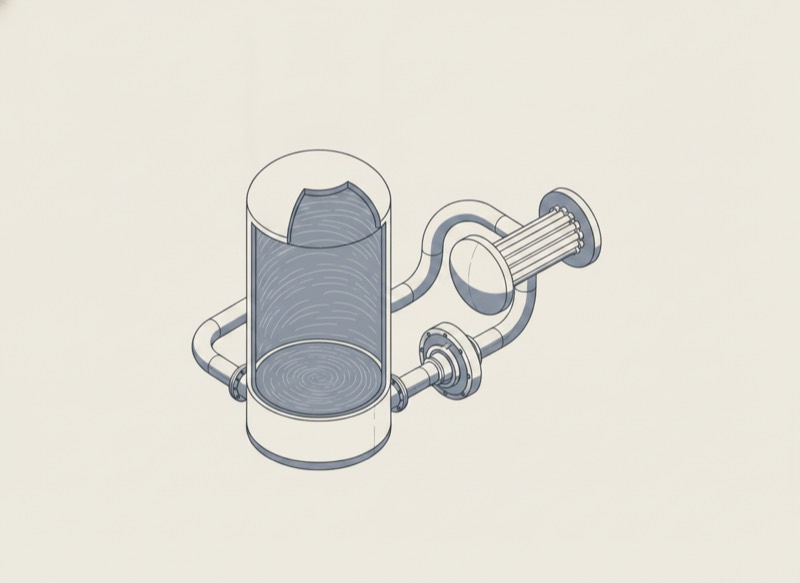
These reactors run molten salt without a moderator. Chloride salts (rather than fluoride) dissolve enough heavy metal to sustain a fast spectrum, so you get liquid fuel's safety and chemistry benefits together with a fast reactor's ability to breed and to burn actinide waste. There's no graphite, so there's no core-life limit, and chloride salts run even hotter than fluorides. In theory this is the endpoint of the fuel cycle, a reactor that could eat spent LWR fuel indefinitely. Almost none of it has ever been built.
Strengths & weaknessesThe concept combines drain-tank passive safety with waste transmutation, needs no fuel fabrication, and needs no graphite replacement. Salt expansion gives a large negative feedback. The weaknesses: chloride salts require isotopically enriched chlorine-37 to avoid neutron poisoning, which means standing up a brand-new supply chain. Corrosion data is thinner than for fluorides, fast-spectrum liquid cores raise novel criticality-safety questions, and startup inventories of fissile material are large (HALEU or plutonium in tonnes rather than kilograms).
When to useThis is the longest-dated bet in the salt family. Back it only if you have decade-plus patience and believe a credible waste-burning reactor changes nuclear politics enough to be worth owning early. Gate any commitment on MCRE's results and on three specifics: chlorine-37 enrichment supply, tonnes-scale fissile startup inventory, and chloride corrosion data. The reactor physics is not the risk. If you want molten-salt heat sooner, look at the FHR or thermal MSRs instead. If you're a state that wants actinide burning sooner, look at sodium fast reactors.
Key numbersFuel and coolant are the same chloride salt, typically sodium chloride carrying uranium or plutonium chlorides · no moderator, fast spectrum · outlet temperature roughly 600–750 °C at atmospheric pressure · chlorine enriched above 99% Cl-37, against 24% natural abundance · fissile startup inventory in tonnes of HALEU or plutonium rather than kilograms · online refueling, so no cladding burnup limit · conversion ratio above 1 in breeder configurations.
ExamplesTerraPower's Molten Chloride Fast Reactor program with its MCRE experiment planned at Idaho National Lab (with Southern Company) — the first fast-spectrum liquid-fuel criticality since the 1960s; Moltex's Stable Salt Reactor (UK/Canada — salt fuel in static pins, a deliberate simplification); Elysium and TerraPower's earlier chloride studies.
Economic profileThis is the furthest from revenue of the salt family, and it carries the biggest strategic prize: a credible waste-burning reactor changes the politics of nuclear everywhere. MCRE's results this decade will determine whether the concept graduates from viewgraph to engineering. Put your diligence weight on chlorine-37 supply, fissile startup inventory, and salt chemistry control. The reactor physics is sound.
VideosMolten Chloride Fast Reactor Technology (TerraPower) · First Fuel Salt Batch for the MCRE (US Department of Energy)
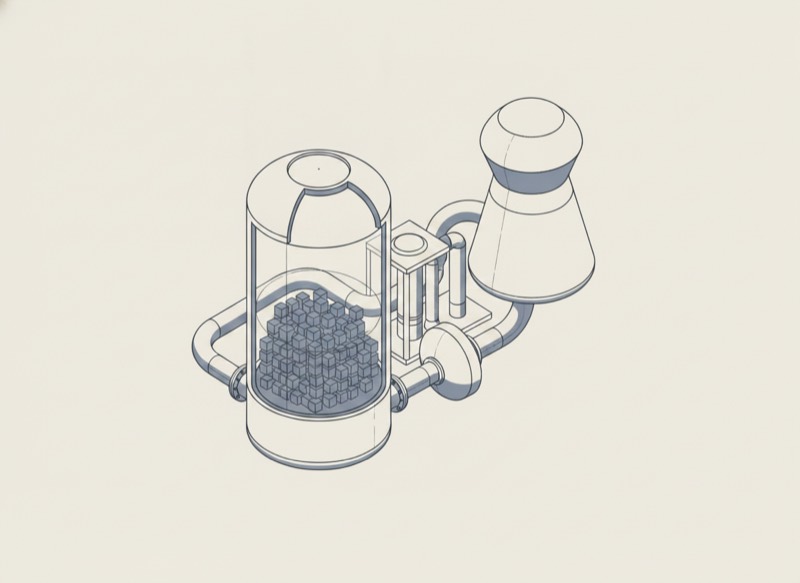
Thorium is a fuel strategy rather than a reactor design. Th-232 is fertile, breeding fissile U-233 under neutron irradiation. It is 3–4× more abundant than uranium, it is the only fertile material that breeds in a thermal spectrum rather than a fast one, and its waste chain is shorter-lived. The canonical embodiment is the Liquid Fluoride Thorium Reactor (LFTR), a two-fluid molten-salt breeder that continuously separates protactinium. India holds vast thorium and little uranium, and has pursued a three-stage program toward thorium for seventy years.
Strengths & weaknessesThe fuel is abundant, breeding works in a thermal spectrum, and transuranic waste is reduced. U-233 also comes contaminated with U-232, whose decay chain emits strong gammas, and that makes weapons diversion genuinely harder. Weaknesses: thorium needs a fissile starter (enriched uranium or plutonium), so it solves no startup problem. The same U-232 gammas that deter proliferation also make fuel handling difficult. Continuous protactinium separation is unbuilt chemical engineering. And the economic case is weak while uranium stays cheap, which has been thorium's perennial problem since the 1960s.
When to useCommit to thorium only when your resource endowment forces it. India's uranium-poor, thorium-rich position is the one honest national case. Otherwise treat it as a far-horizon option layered onto an already-funded molten-salt or reprocessing program. It is never the reason to start a program: every thorium route still needs fissile startup material and unbuilt separation chemistry, and the economics don't close while uranium stays cheap. If you're an investor, the only meaningful signals to track are China's TMSR thorium operation and India's AHWR commitment. For everyone else, the default is the conventional LEU cycle.
Key numbersTh-232 is 3–4× more abundant in the crust than uranium · the fertile chain runs Th-232 to Pa-233 (27-day half-life) to U-233 · thermal-spectrum breeding ratios come out near 1.05, so the margin is thin · U-233 carries parts-per-million U-232, whose Tl-208 daughter emits a 2.6 MeV gamma · LFTR designs target roughly 700 °C outlet at atmospheric pressure · China's TMSR-LF1, the only operating thorium-in-salt reactor, is 2 MWt.
ExamplesIndia's program: KAMINI (U-233 fueled research reactor), thorium blankets in its PHWR fleet, the planned Advanced Heavy Water Reactor; China's TMSR-LF1 running thorium in salt (2023 — the first molten-salt thorium operation since Oak Ridge); historic Shippingport light-water thorium breeding demonstration (1977–82, quietly successful).
Economic profileThorium's advantages are real but modest, and they are chronically oversold. It is a second-order improvement that gets marketed as a revolution. No thorium route avoids first mastering either molten salt technology or reprocessing chemistry, and each of those is a decade-scale program. The investable signal to watch is China's TMSR scale-up and Indian AHWR commitment, not the level of enthusiasm online.
Videos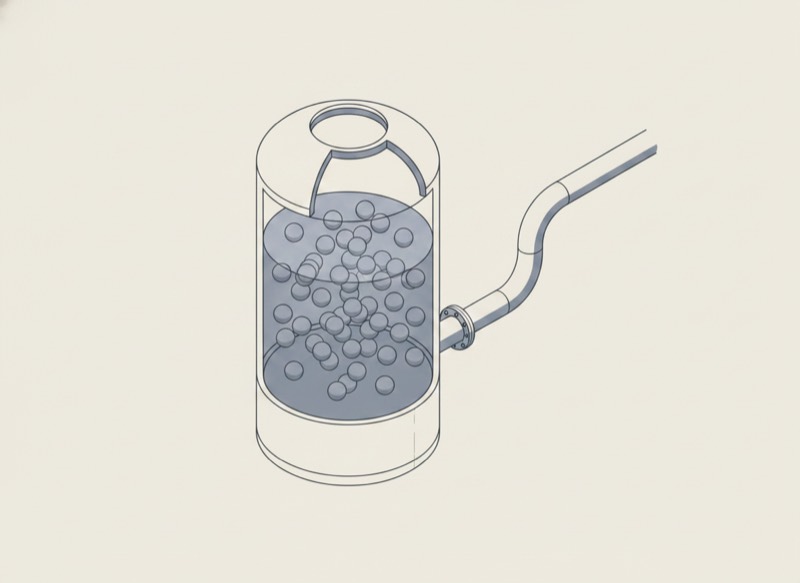
This is the pragmatist's molten-salt reactor. The fuel stays solid (TRISO pebbles, already qualified) and clean fluoride salt (FLiBe) is used only as coolant. That sidesteps liquid-fuel licensing entirely, because the salt is hot and low-pressure but barely radioactive, and you still get 650 °C output and pebble-bed walk-away safety. Kairos Power built its company culture around iterative hardware: non-nuclear salt test loops, then the Hermes demo, then power reactors, with each unit treated as deliberately disposable learning.
Strengths & weaknessesIt runs at atmospheric pressure, uses a qualified fuel form, has a much simpler source term than liquid-fuel MSRs, and delivers high-grade heat. Kairos also has the sector's most disciplined build-test-iterate execution. Weaknesses: FLiBe means beryllium toxicity and lithium-7 enrichment supply, which is another boutique supply chain. TRISO and salt costs stack. Pebble handling in salt is novel. And the design intentionally forfeits liquid fuel's fuel-cycle advantages, because it is a heat plant rather than a breeder.
When to useChoose the FHR path if you want advanced-reactor heat on the nearest credible timeline and you weight execution evidence over fuel-cycle ambition. Permits granted, concrete poured, and hyperscaler offtake signed make it the de-risked entry in the salt family. It fits data-center campuses and TVA-style utilities that want 600 °C-class output without liquid-fuel licensing novelty. Skip it if the prize you're after is breeding or waste burning, which this design deliberately forfeits; that's sodium or chloride-salt territory. Check lithium-7, beryllium, and HALEU supply before underwriting fleet scale-up.
Key numbersHermes demo is 35 MWt, with commercial KP-FHR units targeting roughly 140 MWe · FLiBe coolant at near-atmospheric pressure, 650 °C outlet · solid TRISO pebbles carrying HALEU just under 20% enrichment · lithium-7 enrichment above 99.99% to hold down neutron absorption and tritium · the Google offtake covers 500 MW of fleet output · overnight capex projected in the $3–7k/kW band.
ExamplesKairos Power: Hermes (35 MWt) under construction at Oak Ridge — the first non-water US power-reactor construction permit in 50 years — with Hermes 2 approved, a Google power-purchase agreement for 500 MW of fleet output, and TVA partnership; ORNL's decades of FLiBe research underneath.
Economic profileOn execution evidence this is the most credible near-term advanced-reactor program in the US: permits in hand, concrete poured, hyperscaler offtake signed. The bet is that manufacturing iteration (Kairos casts its own vessels) plus a boring licensing story beats more ambitious physics. Lithium-7 and beryllium supply plus HALEU are the scaling dependencies to watch.
VideosKP-FHR Technology (Kairos Power) · Kairos Power Starts Construction of Hermes Reactor (US Department of Energy)
Micro & special-purpose
compact power for remote and mobile loads3 designs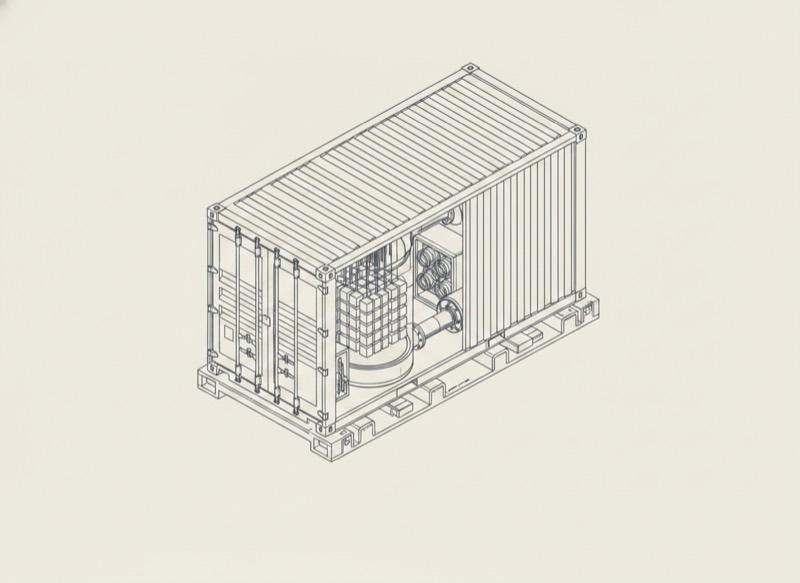
Microreactors treat nuclear as a product rather than a project: 100 kWe–20 MWe units designed for factory assembly, truck transport, and unattended or minimally-staffed operation. Most use TRISO fuel and either heat pipes (solid-state cooling with no pumps, as in Westinghouse eVinci) or compact gas cycles. The target customers aren't buying $/MWh. They're buying power where the grid isn't: remote mines, military bases, disaster response, Arctic communities, and increasingly data centers that want dedicated on-site generation.
Strengths & weaknessesFactory series production is finally plausible at this size, the passive safety case is small enough to argue for tiny emergency-planning zones, and deployment takes weeks. Weaknesses: cost per kW is the worst in the industry ($15–30k+/kW), so the pitch only works against diesel logistics at $0.30–1/kWh. Security and staffing rules built for gigawatt plants have to be rewritten for boxes in the field. HALEU supply gates everyone. And the customer set is real but thin; USNC's bankruptcy showed how fast micro-nuclear burns cash.
When to useBuy a microreactor only where the true competitor is diesel logistics: remote mines, Arctic communities, forward bases, and island grids paying $0.30–1/kWh landed. In those places a sealed multi-year core clears its $15–30k/kW price. Defense procurement is the anchor customer, so treat data-center colocation as upside rather than base case. Don't buy one on grid-scale economics, because a 300 MW-class SMR beats it by an order of magnitude on $/kW. And diligence vendor runway hard, since fuel qualification burns cash for years before first revenue.
Key numbersOutput 100 kWe to 20 MWe, so a unit moves by truck or in standard containers · TRISO or metal fuel at HALEU enrichment just under 20% · sealed cores run 5–10 years, and several designs never refuel on site at all · overnight capex $15–30k/kW or higher, the worst in the industry · that price only clears where diesel lands at $0.30–1/kWh · site setup measured in weeks rather than years.
ExamplesWestinghouse eVinci (heat-pipe, 5 MWe, test unit at INL planned), Oklo's Aurora (liquid-metal, INL site, NRC application famously denied once and refiled; Sam Altman-backed IPO), Radiant Kaleidos (1 MWe, helium; first fueled test slated for the DOME facility at INL), BWXT's Project Pele (DoD transportable prototype), Last Energy's containerized PWR.
Economic profileUnit economics look more like aerospace than utilities: high margin, low volume, logistics-driven willingness to pay. Defense demand (Pele, installation resilience) is the anchor tenant, and data-center colocation is the volume dream. The honest comparison in every deal is a diesel genset fleet plus fuel convoys. If a sealed 8-year core beats that, the price premium clears.
VideosWhat Is a Nuclear Microreactor? (US DOE Office of Nuclear Energy) · eVinci Microreactor (Westinghouse)
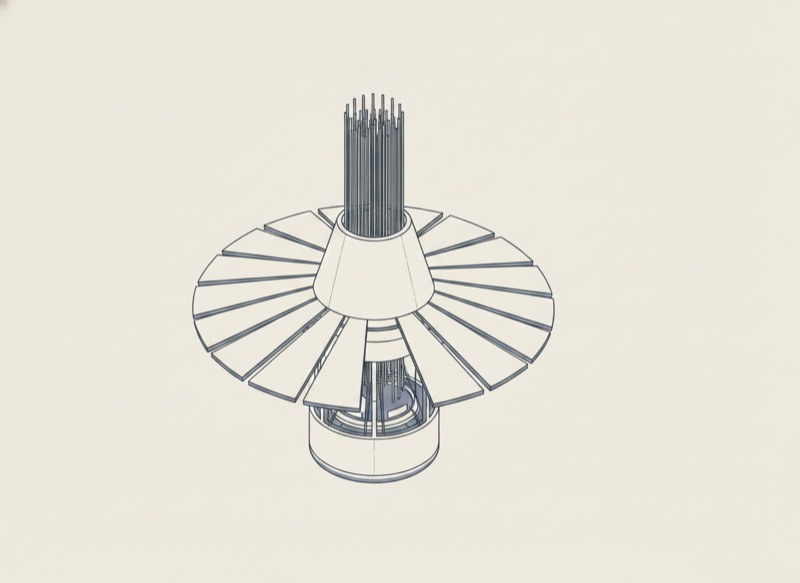
These are reactors for places solar can't reach: kilowatt-to-megawatt units for lunar bases, Mars missions, and deep space, plus nuclear thermal propulsion for fast transit. Modern designs are solid-state. Heat pipes passively wick heat from a compact core to Stirling engines or thermoelectrics, so there are no pumps or coolant loops to fail. NASA's Kilopower/KRUSTY test (2018) was the first new US space-reactor demonstration since 1965's SNAP-10A, the only US reactor ever flown.
Strengths & weaknessesThese systems supply continuous power through lunar nights and dust storms, where solar dies. Heat pipes eliminate nearly every classic failure mode, and RTGs give the approach decades of deep-space heritage. Weaknesses: launch approval for fissile material is politically hard, mass budgets leave little room for shielding, and testing ground-based analogs of space conditions is expensive. Programs in this field (NASA's Fission Surface Power, DARPA/NASA's DRACO nuclear-thermal demo) also have a long history of cancellation before flight, with DRACO's 2025 wind-down the latest.
When to useThis is a mission-driven government market. Specify a fission surface-power or heat-pipe system when the mission profile rules out solar (lunar night, Mars dust, the outer planets) and RTG power levels of a few hundred watts fall short. If you're an investor, you get exposure through component, fuel, and shielding suppliers rather than mission primes, and the commercial payoff is the terrestrial microreactor crossover (eVinci came out of the Kilopower lineage). If you're planning a program, price cancellation as the dominant risk, because the field's history, DRACO included, is programs dying before flight.
Key numbersPower class runs from 1 kWe (KRUSTY) to about 40 kWe (NASA's Fission Surface Power target), against a few hundred watts electric from an RTG · heat pipes with alkali-metal working fluid replace pumped loops entirely, so there are no moving parts in the cooling path · Stirling conversion runs roughly 25–30% efficient against 6–7% for thermoelectrics · KRUSTY ran 28 hours at full power in 2018 on a highly enriched uranium-molybdenum core · NASA's lunar specification is 40 kWe under 6 t launch mass with a 10-year surface life.
ExamplesKRUSTY (1 kWe ground demo), Fission Surface Power program (40 kWe-class lunar unit, industry teams incl. Westinghouse and IX/Intuitive Machines), the Soviet TOPAZ and RORSAT flight heritage, DRACO nuclear-thermal (paused), China/Russia announced lunar-station reactor plans.
Economic profileThis is a government program market rather than a commercial one, but it is strategically load-bearing. Heat-pipe cores, refractory fuels, and compact shielding developed for space flow directly into terrestrial microreactors (eVinci is Kilopower's industrial cousin). For investors the exposure is via component and fuel suppliers rather than missions. For nations it's Artemis-era prestige infrastructure.
VideosKRUSTY Nuclear Ground Test Results and Lessons Learned (NASA NTRS) · Fission Surface Power Project (NASA Glenn)
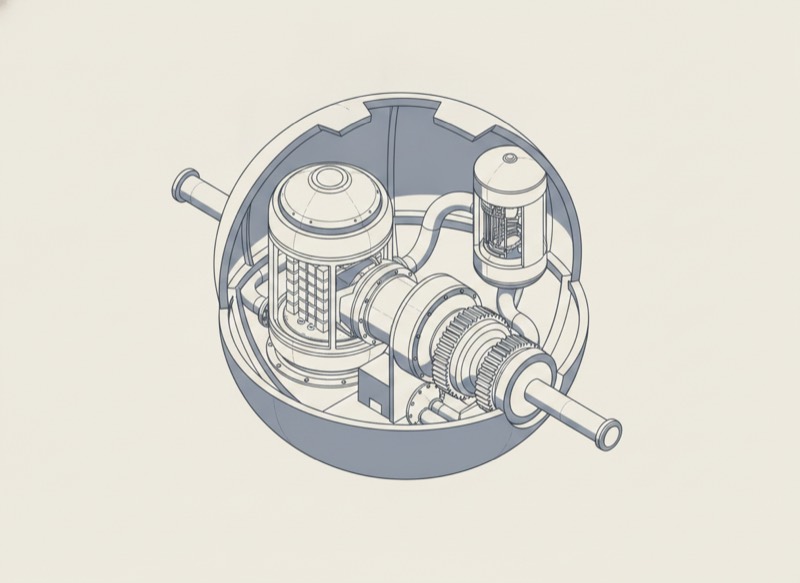
By operational record this is the most successful nuclear program in history: compact PWRs driving submarines and carriers, with the US fleet logging 5,700+ reactor-years and zero radiological accidents. US cores use weapons-grade HEU in robust cermet fuel and reach 30+ year lifetimes with no refueling, so refueling never comes up over the life of the boat. France runs LEU boats (refueling every ~10 years), and AUKUS is exporting the US/UK HEU approach to Australia.
Strengths & weaknessesThese reactors have extreme power density, shock tolerance, decades-long cores, silent natural-circulation operation at low power, and an institutional safety culture (Rickover's) that civilian nuclear still studies. Weaknesses: everything is classified, gold-plated, and cost-insensitive, so almost nothing transfers directly to civilian economics. HEU fuel is a proliferation problem that pushes future designs toward LEU at real performance cost. And the industrial base (two US yards, one UK, one French) is a chronic bottleneck.
When to useThere is only one procurement scenario here. You are a navy (or an icebreaker fleet) for which power density, endurance, and stealth justify defense-budget pricing, and no civilian buyer faces that menu. For civilians the value is evidence and lineage: proof that small PWRs can be serial-built to immaculate quality, the workforce behind Rolls-Royce's SMR credibility, and Russia's RITM-derived floating and land units, which are the one direct naval-to-civilian product line. Draw cost lessons carefully, because nothing in these programs was ever optimized for $/MWh.
Key numbersThe US fleet has logged 5,700+ reactor-years with zero radiological accidents · US cores run HEU above 90% enrichment in cermet fuel and last 30+ years, so the boat is never refueled · France runs LEU under 10% and refuels roughly every 10 years · thermal output is commonly quoted around 150 MWt for an attack submarine and several hundred MWt per unit on a carrier · pressurized-water design with natural circulation at low power for quiet running · the whole Western industrial base is two US yards, one UK, and one French.
ExamplesUS Virginia- and Columbia-class (life-of-ship cores), UK Astute/Dreadnought (Rolls-Royce PWR3), France's Suffren class (LEU K15 lineage), China's expanding fleet, Russia's icebreakers (the civilian cousin — RITM-200 reactors now spun into floating and land SMR offerings).
Economic profileNaval reactors are militarily invaluable and commercially instructive. They prove small reactors can be serial-built with immaculate quality, though only at defense budgets. The civilian spillover is real but indirect: Rolls-Royce's SMR credibility, Russia's RITM-based SMRs, and the trained workforce. AUKUS-driven HEU expansion versus LEU conversion research (a US congressional perennial) is the fuel-policy tension to watch.
VideosPowering the Navy — Naval Nuclear Propulsion Program (US DOE NNSA)
Fusion
power from fusing nuclei, still pre-commercial6 designs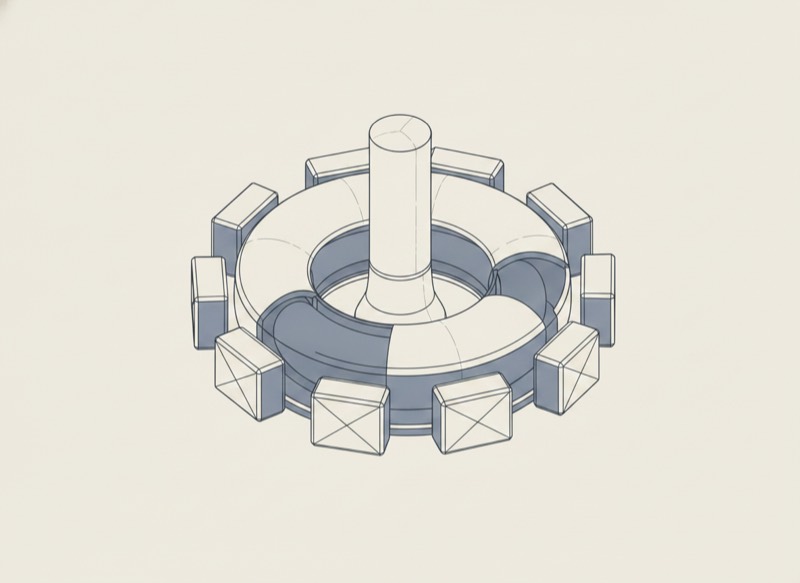
Tokamaks are fusion's front-runner by every metric. A torus of plasma is confined by strong toroidal magnets plus a current driven through the plasma itself, which holds 150-million-degree deuterium-tritium fuel away from every wall. Tokamaks hold all the confinement records (JET's 69 MJ shot, ITER's design goal of Q=10). Since REBCO high-temperature superconducting tape enabled 20-tesla magnets, the machines have shrunk from ITER's cathedral scale to warehouse scale, which is the insight behind Commonwealth Fusion Systems.
Strengths & weaknessesTokamaks have fifty years of accumulated physics, the best confinement performance, and a mature international knowledge base. Weaknesses: the plasma current makes the machine prone to disruptions (sudden collapses that can damage it), and steady-state operation requires continuously driving that current. D-T operation means breeding tritium in lithium blankets, which has never been demonstrated at scale, and it means neutron-degraded first walls that have to be replaced robotically. The engineering gain (electricity out over electricity in, including magnets and systems) also remains far below the plasma physics gain in the headlines.
VariantsITER (first plasma slipping toward mid-2030s), CFS SPARC (Q>1 targeted ~2026–27) and ARC (grid power, early 2030s claim, Virginia site with Dominion).
A cored-apple geometry that gets higher plasma pressure per unit of field: Tokamak Energy's ST40 (99M °C), UK's STEP program (2040 target).
Back tokamaks if you want fusion exposure with the least plasma-physics risk and the most independent validation. This is where the confinement data, the supply chain, and the capital sit, and SPARC is the field's nearest scheduled Q>1 test. A national program buying one decadal magnetic-fusion effort should default here for the same reason. Diversify elsewhere if you judge the binding risks to be the engineering ones tokamaks carry structurally (disruptions, current drive, tritium breeding), which is the stellarator's case for the endgame plant. If you want higher-variance, higher-ceiling exposure, the FRC and pulsed camps are the complement.
Key numbersPlasma runs at roughly 150 million °C · REBCO high-temperature superconductors reach 20 T, against ITER's 11.8 T peak field on niobium-tin · JET's record D-T shot released 69 MJ · ITER targets Q=10, meaning 500 MW of fusion power from 50 MW of heating, and SPARC targets Q>1 around 2026–27 · EAST has held H-mode plasma past 1,000 s · a self-sufficient plant needs a tritium breeding ratio above roughly 1.05, and no blanket has shown it at scale.
ExamplesJET (retired 2024 after record D-T runs), KSTAR and EAST long-pulse records, CFS assembling SPARC in Devens with ~$2B+ raised, the flagship private fusion program.
Economic profileTokamaks attract most of fusion's capital. CFS alone holds a large share of all private fusion funding, plus a signed 200 MW Google offtake. The bet decomposes into three things that all have to work in sequence: SPARC's Q>1, tritium self-sufficiency, and an availability-and-maintenance story competitive with anything on the grid. Even bulls should model first commercial electricity no earlier than the early-to-mid 2030s and fleet relevance in the 2040s.
VideosThe ITER Machine (ITER Organization) · Overview of the SPARC Tokamak (Journal of Plasma Physics, open access)

A stellarator is the tokamak's close relative. Instead of driving current through the plasma, it builds the confinement twist entirely into very complicated external magnets. With no plasma current there are no disruptions and operation is inherently steady-state, so the two problems that most threaten tokamak power plants don't exist here. The price was always that the 3D coil shapes were unbuildable. Germany's Wendelstein 7-X (designed by supercomputer, built over 15 years) proved they no longer are.
Strengths & weaknessesStellarators are intrinsically steady-state, disruption-free, and quiescent, which is the most reactor-like operating mode in magnetic fusion. Weaknesses: confinement historically trailed tokamaks (W7-X is closing the gap). The coils are the hardest magnets ever manufactured, and getting maintenance access through the tangle of them is a serious plant-design problem. The field also sits a machine-generation behind tokamaks, and no stellarator has ever run D-T fuel.
When to useBack stellarators on the thesis that the hard part of fusion is running a plant 8,000 hours a year rather than reaching first gain. Steady-state, disruption-free operation is what tokamaks have to engineer around, and stellarators get it from geometry. The bet requires two things to be true: that HTS magnets plus modern optimization close W7-X's confinement gap, and that coil manufacturing and maintenance access yield to the Type One/Proxima generation of designs. The value case is that entry prices run an order of magnitude below the tokamak camp's. If you need a near-term Q>1 catalyst, be in tokamaks instead.
Key numbersW7-X runs 2.5 T on axis in a 30 m³ plasma, held by 50 non-planar and 20 planar superconducting coils · discharges have reached 8 minutes, with no plasma current and therefore no disruptions · the machine took about 15 years and roughly €1B to build · coil geometry has to hold millimeter tolerances, which is the manufacturing constraint · no stellarator has ever run D-T fuel, so there is no measured Q for the concept.
ExamplesWendelstein 7-X (Greifswald, record stellarator triple products and 8-minute plasmas, the field's flagship); Type One Energy (Infinity One design, TVA partnership at a retired coal site, the leading private effort); Proxima Fusion (Munich, W7-X heritage, HTS coils); Thea Energy (planar-coil simplification); Japan's LHD heritage.
Economic profileThe thesis is that tokamaks win the race to Q>1 and stellarators win the race to a power plant that runs all year. Modern optimization plus HTS magnets could leapfrog a machine generation. Private funding is an order of magnitude below the tokamak camp's, which makes stellarators the value bet in fusion portfolios. The odds on timing are long, but the odds that the physics choice is right for the endgame are strong.
VideosWendelstein 7-X (Max Planck Institute for Plasma Physics) · Stellarator Research Opportunities (National Stellarator Coordinating Committee, via DOE OSTI)
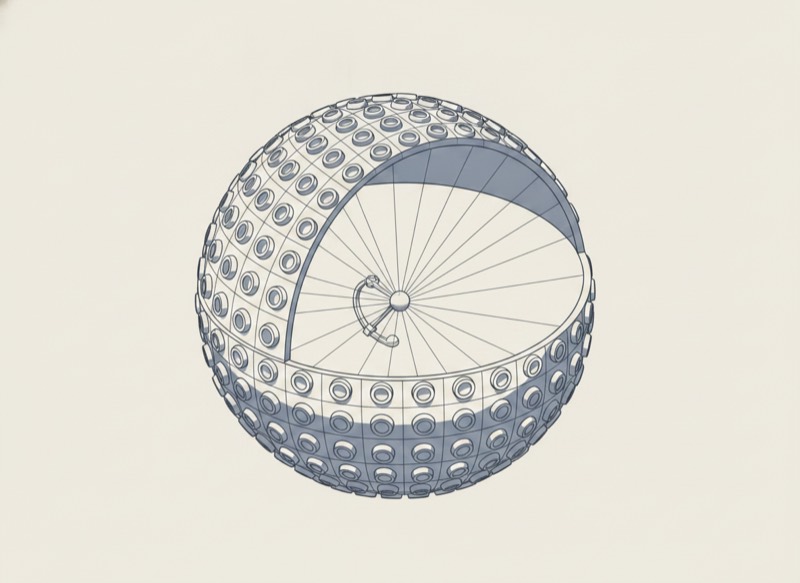
ICF fuses fuel by implosion. Converging laser energy crushes a peppercorn-sized D-T capsule until it ignites, and it burns in nanoseconds before it flies apart, so the only thing confining it is its own inertia. The National Ignition Facility made history in December 2022 with the first laboratory ignition (3.15 MJ out, 2.05 MJ laser in), and has repeated it since with gains above 2. The catch is that NIF's wall-plug lasers consumed ~300 MJ per shot and fire a few times a day, while a power plant needs gain of ~50–100 at ten shots per second, forever.
Strengths & weaknessesThis is the only approach with demonstrated ignition, it needs no magnets and no steady-state plasma to sustain, and its subsystems (laser, target, chamber) are separable enough to iterate independently. Weaknesses: the gap from scientific to engineering gain is a factor of ~100 in laser efficiency and repetition rate. Targets have to cost cents rather than the thousands of dollars of hand-built NIF capsules, at millions per year. The final optics stare directly at fusion neutrons. And NIF itself is a weapons-stewardship facility whose geometry (indirect drive) is knowingly inefficient for energy.
When to useBack laser inertial fusion if you weight demonstrated ignition above all else and you believe diode-pumped laser efficiency and cents-per-unit target manufacturing can each improve by the required factor of ~100. The bet rides on those two cost curves rather than on plasma physics. The defense overlap is a genuine de-risker, since stockpile-stewardship revenue can carry ventures across the long gap to power. If you like the inertial physics but not the laser economics, pulsed-magnetic drivers (Pacific Fusion) run the same wager on capacitors at a tenth the driver cost. If you need power-plant engineering plausibility now, look at MTF or the tokamak camp.
Key numbersNIF's 192 beams put 2.05 MJ on target for 3.15 MJ of fusion yield in December 2022, and later shots have passed gain 2 · wall-plug draw is roughly 300 MJ per shot at a few shots per day · a power plant needs gain of 50–100 at about 10 shots per second · the D-T capsule is about 2 mm across and burns in nanoseconds · targets cost thousands of dollars each today and have to reach cents at millions of units per year · diode-pumped lasers have to hit roughly 10% wall-plug efficiency, against under 1% for NIF's flashlamps.
ExamplesNIF (LLNL, ignition achieved repeatedly), Xcimer Energy (Denver, excimer lasers at 10× NIF energy for cheap direct drive), Focused Energy (Texas/Darmstadt, proton fast ignition), Germany's Marvel Fusion, historic Laser Mégajoule (France) and Omega (Rochester).
Economic profileIgnition transformed the field's credibility and fundraising overnight, but every link in the commercial chain (diode-pumped lasers at ~10% efficiency, mass-produced targets, chamber survivability) is its own venture-scale program. The near-term revenue is defense work. Inertial fusion expertise is stockpile-stewardship expertise, and several startups quietly monetize that overlap while the power plant slips into the 2040s.
VideosAchieving Fusion Ignition (LLNL National Ignition Facility) · Basic Research Needs for Inertial Fusion Energy — Summary (US DOE)
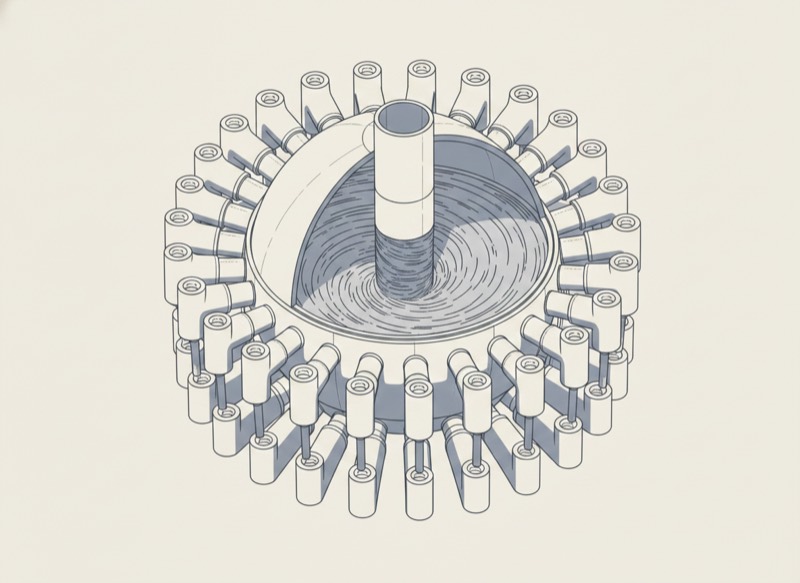
MTF sits between magnetic and inertial fusion. You form a magnetized plasma (typically a compact toroid), then mechanically crush it to fusion conditions with imploding liquid-metal liners, pistons, or pulsed fields. The magnetization slows heat loss during compression, so the implosion can be a thousand times slower and cheaper than laser ICF: steam-driven pistons instead of megajoule lasers. General Fusion's design compresses plasma inside a rotating cavity of liquid lithium-lead, which serves as neutron blanket, tritium breeder, and heat-capture medium all at once.
Strengths & weaknessesPlant integration is unusually clean, because the liquid-metal liner solves first-wall damage, tritium breeding, and heat extraction simultaneously, and the compression hardware is industrial machinery rather than exotic optics. Weaknesses: the target plasma has to survive compression without instabilities destroying it, and that core physics risk is still unproven at scale. Repetition-rate engineering (a new plasma every second, in liquid metal) is barely explored. And the field is effectively a handful of companies, so a single company's stumble reads as a verdict on the whole category.
When to useBack MTF if your read is that engineering, rather than physics, is what kills fusion projects. Here the plant-killer problems (first-wall damage, tritium breeding, heat capture) are all solved at once by the liquid-metal liner, which leaves a single concentrated physics question: whether the target plasma survives compression. That inversion suits investors who prefer one binary technical risk over a long chain of engineering problems that all have to go right. Size the position for a category that is one or two balance sheets deep. If you want diversified, physics-validated fusion exposure, you belong in tokamaks.
Key numbersCompression runs roughly a thousand times slower than laser ICF, which is what lets pistons and pulsed fields replace megajoule lasers · repetition rate has to reach about one shot per second · a rotating liquid lithium-lead liner handles neutron shielding, tritium breeding, and heat capture in one part · the 14.1 MeV D-T neutrons deposit in that liquid rather than in a solid first wall · General Fusion's LM26 targets 100 million °C and scientific-breakeven-equivalent conditions, after 20+ years of development.
ExamplesGeneral Fusion (Vancouver, 20+ years, Bezos-backed; its LM26 machine demonstrated plasma compression milestones in 2025 amid deep funding difficulties), Helion arguably borrows MTF physics in pulsed form, historic LANL FRX-L and Soviet MAGO programs.
Economic profileOn paper this is the cheapest path to a plant that sells power rather than another experiment, because everything expensive about tokamaks and lasers is replaced by pistons and pumps. In practice the category's fortunes track one company's balance sheet. For diligence, price the plasma-compression physics as the whole risk, because the engineering story, uniquely in fusion, is already plausible.
VideosMagneto-Inertial Fusion (Journal of Fusion Energy, open access) · Magnetized Target Fusion with a Spherical Tokamak (Journal of Fusion Energy)
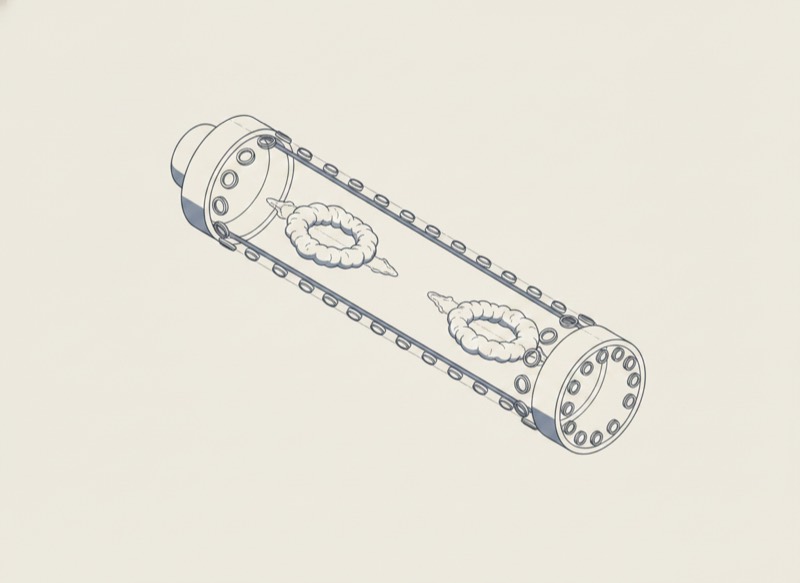
An FRC is a self-organized smoke-ring of plasma that confines itself with its own internal currents inside a simple cylindrical chamber, with no toroidal field coils threading the plasma at all. The geometry gives extreme plasma pressure relative to magnetic field (high beta), which makes it the natural home for advanced fuels. Helion accelerates two FRCs to collision at a million mph, compresses the merged plasma, and then takes electricity straight out of the expanding plasma as it pushes back on the magnetic field, skipping steam entirely (no other fusion approach does this). TAE aims further still, at aneutronic proton-boron fuel.
Strengths & weaknessesThe geometry is simple and linear, Helion's direct electricity recovery tolerates lower gain, and the fuel cycles (D-He3, p-B11) produce few or no neutrons, which sidesteps tritium logistics and wall damage. Weaknesses: FRC stability and confinement at reactor scale remain the great unknown, since the configuration historically decays in milliseconds. Advanced fuels demand plasma temperatures 10–50× more demanding than D-T. Helion's D-He3 requires breeding helium-3 from D-D reactions in-machine. And the field's boldest commercial promises sit furthest ahead of published physics.
When to useBack the FRC camp for the highest-ceiling outcome in fusion. Direct electricity conversion and low-neutron fuels would obsolete the steam-cycle plant everyone else is designing, provided the self-organized plasma holds together at reactor scale, which remains unproven. Underwrite on published triple products and on dated, penalty-backed commitments like Helion's Microsoft PPA rather than on announcements; the gap between the two is precisely the risk being priced. This is venture-shaped exposure where commercial promises lead the physics. If you want validation-first fusion, you belong in tokamaks. If you want cheap-hardware optionality, look at the pulsed camp.
Key numbersPlasma beta runs 0.8–0.9, against a few percent in a tokamak, which is what makes advanced fuels thinkable · Helion accelerates two FRCs to collision at about a million mph · D-T ignites near 100 million °C, D-He3 near 1 billion °C, and p-B11 near 3 billion °C · Helion claims up to 95% electrical recovery direct from the expanding plasma, against 33–40% for a steam cycle · the Microsoft power agreement is 50 MW starting 2028 · TAE has raised about $1.2B.
ExamplesHelion (Everett, WA): Polaris machine targeting first fusion electricity, a signed 2028 Microsoft power agreement (fusion's first PPA) and Sam Altman as chairman; TAE Technologies (California, ~$1.2B raised, p-B11 roadmap via its Copernicus machine); University of Washington and PPPL FRC research lineage.
Economic profileThis is the venture-capital shape of fusion: the highest ceiling (direct conversion, clean fuels, small machines), the widest error bars, and commercial commitments that lead the physics rather than trail it. The Microsoft PPA converts credibility risk into a dated, penalty-backed test. Track published triple-product data rather than announcements; the gap between the two is the investment.
VideosField Reversed Configurations — the classic review (Nuclear Fusion) · Overview of C-2W Beam-Driven FRC Plasmas (Nuclear Fusion)
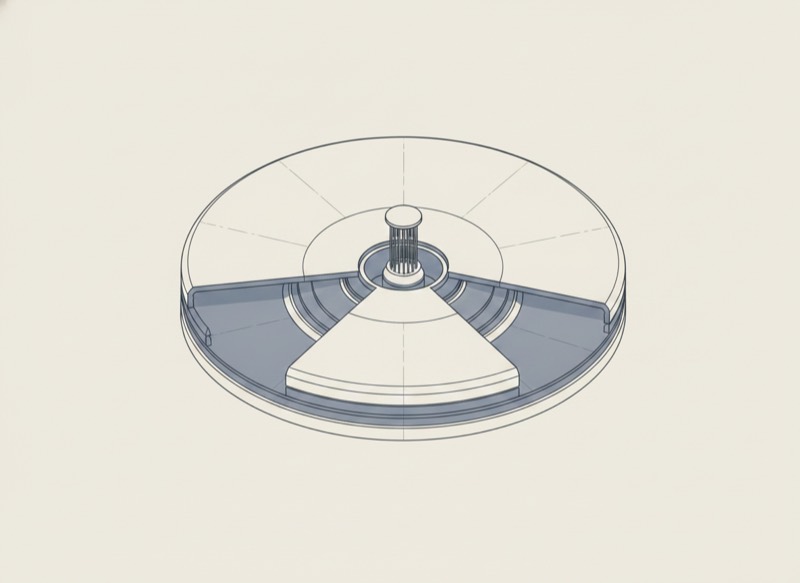
This is the oldest fusion idea, now rehabilitated. You run an enormous current through plasma and let its own magnetic field pinch it to fusion density, with no external confinement magnets at all. Classic Z-pinches died of instability in the 1950s, and the modern revival adds stabilizing physics. Zap Energy's sheared axial flow keeps the column intact, while Pacific Fusion and Sandia's MagLIF compress fuel-filled liners with precisely-timed megaampere pulses. That is inertial fusion driven by capacitors instead of lasers, at perhaps a tenth the driver cost.
Strengths & weaknessesThe hardware is very simple and cheap: capacitor banks and electrodes rather than superconductors or megajoule optics, and small unit sizes are conceivable. Weaknesses: instability suppression has to hold at fusion gain, not only at breakeven-adjacent conditions. The electrodes sit very close to the plasma and have to survive millions of pulses. Repetition rate and liner/target replacement carry the same rep-rate problem as laser ICF. And the approach's history is full of pinches that worked right up until they scaled.
When to useBack pulsed-magnetic approaches if you want fusion's cheapest iteration loop. Capacitor banks and electrodes ride commodity power-electronics cost curves, so each experiment (and each eventual unit) costs a fraction of superconducting magnets or megajoule optics. The risk profile is the tokamak's inverse: nearly all of it is whether instability suppression and electrode survival hold at gain conditions, and almost none of it is capital cost. That makes this the natural high-variance satellite position in a fusion portfolio. If you need demonstrated confinement scaling or a near-term gain catalyst, hold tokamaks or laser ICF instead.
Key numbersSandia's Z machine delivers about 26 MA in roughly 100 ns, the largest pulsed-power drive anywhere · MagLIF preheats the fuel with a laser inside a 10 T axial field, then crushes a centimeter-scale liner with about 20 MA · Zap's sheared-flow Z-pinch runs at a few hundred kA in a column tens of centimeters long, with no external confinement coils · driver hardware costs roughly a tenth of an equivalent laser · electrodes sit close to the plasma and would have to survive millions of pulses in a plant.
ExamplesZap Energy (Seattle, sheared-flow Z-pinch, FuZE-Q targeting scientific breakeven-relevant conditions), Pacific Fusion ($900M raised at founding, pulser-driven inertial fusion with NIF-ignition alumni), Sandia's MagLIF program and Z machine (the world's largest pulsed-power facility), UK's First Light Fusion (projectile-driven inertial, a related approach; pivoted to supplying targets and amplifiers).
Economic profileThis is the capital-efficiency wing of fusion. If confinement physics cooperates, the driver hardware is commodity power electronics riding its own cost curve. Pacific Fusion's founding raise signals investor appetite for "NIF physics with affordable drivers." The risk concentration is inverted from tokamaks: the machine is cheap and the physics uncertainty is expensive, which makes this the highest-variance, lowest-capex corner of the field.
VideosZ-Pinch Fusion — review by U. Shumlak (Journal of Applied Physics, via DOE OSTI) · Z Pulsed Power Facility (Sandia National Laboratories)
No designs match the current filters.
Try clearing a facet or broadening the search.
Glossary
Terms that show up in the design explorer and are not obvious from outside the field. Numbers are typical values, not specifications.
| Term | What it means |
|---|---|
| Actinide burning | Fissioning the long-lived heavy elements in spent fuel (plutonium, americium, curium) instead of storing them. Fast-spectrum reactors can do it and thermal reactors mostly cannot, which is the main non-economic argument for sodium and chloride-salt designs. |
| Burnup | Energy pulled out of fuel before it is discharged, measured in gigawatt-days per tonne (GWd/t). Light-water fuel reaches 45–55 GWd/t, CANDU natural-uranium bundles about 7, TRISO pebbles 90–160, and fast reactors are designed for 100–150. Higher burnup means fewer fuel loads and less spent fuel per unit of energy. |
| CANDU | The Canadian pressurized heavy-water design, moderated and cooled by heavy water inside horizontal pressure tubes. Heavy water absorbs so few neutrons that the reactor runs on natural uranium with no enrichment, and the tube layout allows refueling at power. The costs are a heavy-water inventory worth hundreds of millions and a mid-life retubing. |
| Capacity factor | Energy actually generated divided by what the plant would make running flat out all year. The US light-water fleet runs above 90%, the highest of any generation type. Nuclear cost is almost entirely capital, so capacity factor moves cost per MWh far more than fuel price or thermal efficiency does. |
| Containment | The sealed structure around a reactor that holds radioactive material in if the core is damaged, usually a thick reinforced-concrete shell with a steel liner. It is one of the largest single items in plant capital cost, which is part of why a small reactor's cost does not shrink in proportion to its output. |
| Control rods | Neutron-absorbing rods driven into the core to reduce reactivity, and dropped fully in to shut the reactor down. They are the fast, active control. The slow, passive one is the fuel's own temperature feedback, which reduces reactivity as the core heats up, and a design whose feedback stays negative in every relevant condition is what "inherently safe" usually means. |
| Decay heat | Heat that fission products keep producing after the reactor is shut down. Removing it with no power, no operators, and no moving parts is what a passive safety case has to demonstrate, and failing to remove it is what destroyed the Fukushima cores. |
| Disruption | A sudden loss of plasma confinement in a tokamak, dumping the plasma's energy and current into the wall in milliseconds. The forces and heat loads a disruption produces size much of the machine's structure, and avoiding or mitigating them is a standing engineering problem that stellarators sidestep by design. |
| D-T fuel | Deuterium and tritium, the fusion reaction that ignites at the lowest temperature and the one nearly every near-term device targets. Tritium does not occur naturally and has a 12-year half-life, so a D-T plant has to breed its own from lithium. The reaction also throws 14 MeV neutrons that damage and activate everything around the plasma. |
| Emergency planning zone | The radius around a plant inside which evacuation planning is required. A smaller zone lets a reactor sit closer to the customer it powers, so shrinking it is a large part of the commercial case for SMRs, HTGRs, and microreactors. |
| Enrichment | Raising the share of U-235 above the 0.7% found in natural uranium, done in centrifuge cascades. Light-water fuel needs under 5%, most advanced designs need 5–20%, and above 20% the material falls under weapons-proliferation controls. CANDU needs no enrichment at all. |
| Fast spectrum | Running the chain reaction on unmoderated, high-energy neutrons. Fast reactors can breed more fuel than they burn and can fission actinides, but they need high-fissile startup cores (HALEU or plutonium) and tougher structural materials. |
| Fertile and fissile | Fissile isotopes (U-235, Pu-239, U-233) fission when they absorb a neutron. Fertile ones (U-238, Th-232) do not, but they convert into fissile material after absorbing one. Breeding is that conversion, and a breeding ratio above 1.0 means the reactor makes more fuel than it consumes. |
| FHR | Fluoride-salt-cooled high-temperature reactor: TRISO fuel held in solid form, cooled by molten fluoride salt at atmospheric pressure. It takes the fuel from HTGRs and the coolant from molten-salt reactors, so the fuel stays solid and the novel licensing question is the coolant rather than a circulating fuel salt. |
| FLiBe | A molten salt of lithium and beryllium fluorides, used as coolant in FHRs and as the carrier salt in fluoride MSRs. It melts near 460 °C, so the loop has to be kept hot, and it needs lithium-7 enriched above 99.99% plus handling for beryllium toxicity. |
| FOAK and NOAK | First-of-a-kind and nth-of-a-kind. Vendors quote NOAK cost, but the first unit a buyer orders is a FOAK unit, and recent Western FOAK nuclear has landed 2–3× above the estimate. |
| Fuel cycle | What happens to fuel before and after the reactor. A once-through cycle mines, enriches, burns, and stores. A closed cycle reprocesses spent fuel to recover plutonium and uranium and burns them again, cutting waste volume and mined uranium demand while raising cost and proliferation concerns. Most countries run once-through. |
| Gen III+ and Gen IV | Generation III+ is the current large light-water fleet with passive safety added (AP1000, EPR, APR-1400). Generation IV is the six coolant families picked for development in 2001: sodium-cooled fast, lead-cooled fast, gas-cooled fast, very-high-temperature gas, supercritical water, and molten salt. Almost every advanced-reactor company is building one of those six. |
| HALEU | High-assay low-enriched uranium, enriched to 5–20% U-235 (usually just under 19.75%), against the under-5% LEU the light-water fleet runs on. Most advanced designs need it, and Western supply is barely established, so it gates schedules that the vendors do not control. |
| Heat pipe reactor | A microreactor that carries heat out of the core through sealed pipes holding a working fluid that evaporates at the hot end and condenses at the cold end, with no pumps and no coolant loop. It scales only to a few megawatts, and it removes the pumps, valves, and loss-of-coolant scenarios that dominate a conventional safety case. |
| HTGR | High-temperature gas-cooled reactor: helium coolant, graphite moderator, TRISO fuel, and outlet temperatures of 750–950 °C. That outlet temperature suits industrial process heat and hydrogen production, which is most of the commercial argument. Power density is low, so the reactor building is large for the output. |
| ICF | Inertial confinement fusion: compressing a fuel capsule with lasers or pulsed power fast enough that it fuses before it flies apart, in nanoseconds rather than seconds. The US National Ignition Facility got more fusion energy out than the laser put into the target in 2022. A power plant needs several shots a second and far better wall-plug efficiency. |
| Ignition | The point at which energy from the fusion reactions themselves keeps the plasma hot with no outside heating. It is a different bar from Q=1, and in inertial fusion it is measured against the energy delivered to the target rather than the electricity the lasers drew from the grid. |
| LEU and HEU | Low-enriched uranium is under 20% U-235; highly enriched uranium is above it, which is where non-proliferation controls change character. The operating fleet runs on LEU under 5%. HEU is used in naval propulsion and a few research reactors, and converting those to LEU has been a decades-long program. |
| Liquid-fuel reactor | A reactor where the fuel is dissolved in the coolant, usually a molten fluoride or chloride salt, rather than sealed into solid pins. It can be refueled and cleaned while running and cannot melt down in the usual sense, since the fuel is already molten. It also puts the whole fission-product inventory into a circulating loop, which is the licensing problem nobody has solved commercially. |
| Load following | Varying a plant's output to track grid demand instead of running flat out. Nuclear cost is almost all capital, so plants prefer to run baseload, and renewables-heavy grids want flexibility anyway. That is why Natrium adds a molten-salt heat store to peak from 345 MWe to 500. |
| LWR | Light-water reactor: ordinary water as both coolant and moderator. It covers PWRs, where the primary water stays liquid at about 155 bar and boils a separate secondary loop, and BWRs, where the core boils directly and the steam goes to the turbine. Roughly 90% of the world's reactors are one or the other, and everything else is compared against them. |
| Moderator | Material that slows neutrons to the low energies where U-235 fissions readily: ordinary water, heavy water, or graphite. The choice sets how much enrichment the fuel needs, since heavy water absorbs so few neutrons that natural uranium works. Fast reactors have no moderator at all. |
| MOX | Mixed-oxide fuel, uranium oxide blended with plutonium oxide recovered from spent fuel or weapons stockpiles. Some PWRs are licensed for partial MOX cores, and Russia's BN-800 runs on it as the only commercial fast reactor doing so. |
| MWe and MWt | Megawatts of electricity delivered against megawatts of heat produced in the core. A light-water reactor converts at about 33%, so 3,000 MWt gives roughly 1,000 MWe. Vendors sometimes quote the thermal number, so check which one a "300 MW" reactor means. |
| On-power refueling | Replacing fuel while the reactor keeps running, which CANDU and the Magnox and AGR designs can do and light-water reactors cannot. It takes the refueling outage out of the capacity factor and adds a fuel-handling machine that has to work reliably on a live core. |
| Overnight capex | Plant capital cost per kilowatt of capacity, quoted as if the plant went up overnight, so it excludes interest during construction. Chinese and Korean builds land at $2.5–4k/kW and recent Western first-of-a-kind builds at $12–15k/kW. |
| Passive safety | Safety functions that run on gravity, natural circulation, stored pressure, and material properties, with no pumps, no power, and no operator action. The usual test is removing decay heat for 72 hours with the site blacked out. It is the main design difference between the older fleet and Generation III+. |
| Pebble bed | An HTGR core filled with tennis-ball-sized graphite spheres holding TRISO particles, circulated slowly so fuel is added and removed continuously. It refuels without shutting down, and the moving bed makes core physics and fuel handling harder than a fixed core. |
| Prismatic core | The other HTGR layout: TRISO particles are packed into hexagonal graphite blocks that stay in place, and refueling means shutting down and swapping blocks. Against a pebble bed, the core is easier to model and the plant gives up availability to outages. |
| Q (fusion gain) | Fusion power out divided by heating power into the plasma. Q=1 is scientific breakeven and ITER targets Q=10, meaning 500 MW of fusion power from 50 MW of heating. It counts plasma heating rather than wall-plug electricity, so a plant's engineering gain is much lower than its Q. |
| REBCO tape | Rare-earth barium copper oxide, a high-temperature superconductor sold as coated tape. It carries enough current for 20-tesla magnets, against ITER's 11.8 T niobium-tin, and that field strength is why private tokamaks shrank from ITER's scale to warehouse scale. |
| Reprocessing | Chemically separating plutonium and uranium out of spent fuel so they can be fabricated into new fuel. It cuts high-level waste volume and mined uranium demand. It also costs more than fresh fuel at current uranium prices and separates weapons-usable plutonium, which is why most countries don't do it. |
| SFR | Sodium-cooled fast reactor, the most-built Generation IV family, running liquid sodium at atmospheric pressure with a fast neutron spectrum. Sodium moves heat very well, and it burns in air and reacts violently with water, so the plant carries an intermediate loop and extensive inerting. It can breed fuel and burn actinides. |
| SMR | Small modular reactor, conventionally under 300 MWe, built as factory-made modules and shipped to site. The argument is that serial factory production and a smaller emergency planning zone beat the economies of scale a large plant enjoys. It only works if enough units get ordered to move down the learning curve. |
| Stellarator | A magnetic fusion device that twists the confining field using the shape of its coils instead of driving a current through the plasma. Removing the plasma current means steady-state operation and no disruptions, and it makes the coils much harder to design and build. Wendelstein 7-X is the working example. |
| Thorium | A fertile element roughly three times as abundant as uranium, which absorbs a neutron and converts to fissile U-233. It cannot start a reactor by itself, so a thorium cycle needs a fissile driver, and the U-233 it produces comes with a hard gamma emitter that forces remote fuel handling. India and China are the two programs pursuing it seriously. |
| Tokamak | The dominant magnetic fusion design: a doughnut-shaped chamber where external coils plus a current driven through the plasma itself do the confining. It has the best confinement record of any configuration, and driving that current means pulsed operation and disruption risk. High-temperature superconducting tape is what let private tokamaks shrink to warehouse scale. |
| TRISO | Tri-structural isotropic fuel: poppy-seed-sized uranium kernels wrapped in ceramic layers that hold fission products in above 1,600 °C. Each particle is its own containment, which is the basis of the walk-away safety case in HTGRs and FHRs. Fabrication is expensive and Western capacity is only now scaling. |
| Tritium breeding ratio | Tritium bred in a fusion plant's lithium blanket per tritium burned in the plasma. A D-T plant has to exceed roughly 1.05 to fuel itself, and no blanket has shown that at scale, which is one of the main unproven items in D-T fusion. |
| Void coefficient | How reactivity changes when coolant boils and leaves voids in the core. A negative coefficient damps the reaction as boiling increases; the RBMK's positive void coefficient is what let Chernobyl's power excursion run away. |
| Walk-away safety | A core that cannot be damaged even if everyone leaves and nothing is powered, because decay heat conducts and radiates away below the temperature at which the fuel fails. TRISO fuel supports the claim by holding fission products in above 1,600 °C. It is the argument behind every proposal for a smaller emergency planning zone. |
| Wall-plug efficiency | The share of electricity drawn from the grid that arrives at the plasma as heating or laser energy. It is why a fusion Q of 10 is not yet a power plant: at 10–20% wall-plug efficiency the drivers can consume more electricity than the fusion power would generate. |
How to evaluate a reactor design
Reactor physics is rarely the hard part. Nearly every design in this sheet works, and most of them worked in a national lab decades ago. What separates deployed fleets from perpetual concepts is everything around the core: capital cost and construction risk, fuel-cycle logistics, regulatory pathway, and the arithmetic of decade-long timelines running against competitors that improve every year.
Engineering factors
| Factor | Why it matters |
|---|---|
| Coolant & moderator | The choice of water, gas, sodium, lead, or salt sets operating temperature, pressure, materials, the safety case, and the failure modes. |
| Outlet temperature | ~300 °C (LWR) makes electricity at ~33% efficiency; 550–950 °C (sodium, salt, gas) allows better cycles and opens industrial heat, hydrogen, and synfuel markets. |
| Pressure | 155-bar PWR vessels drive containment size and forging supply chains; low-pressure salt and sodium systems shrink both, which is one of the genuine advanced-reactor advantages. |
| Passive safety | Designs that remove decay heat with no power, operators, or moving parts (SMRs, HTGRs, salt) simplify siting, emergency planning zones, and public argument. |
| Neutron spectrum | Thermal reactors need moderation and burn ~1% of mined uranium; fast reactors breed and burn actinides but need high-fissile startup cores and harder materials. |
| Materials & corrosion | Sodium burns in air, salts corrode alloys, helium leaks, lead erodes pumps. These details account for much of the forty years of delay in "advanced" designs. |
| Load following | Grids with heavy renewables want flexible output; xenon dynamics and thermal stress limit some designs more than others. |
| Fuel form & burnup | TRISO particles, metal fuel, and liquid salts each trade fabrication cost against burnup, safety margin, and waste form. |
Economic and strategic factors
| Factor | Why it matters |
|---|---|
| Overnight capex ($/kW) | The headline number. Western FOAK projects (Vogtle ~$15k/kW, Flamanville, Hinkley) ran 2–3× estimates while China and Korea build the same physics at $2.5–4k, so most of the gap is execution rather than design. |
| Construction time & interest | At nuclear capital intensity, financing cost compounds quickly: a 12-year build can double the effective cost. Schedule certainty usually matters more than thermal efficiency. |
| FOAK → NOAK curve | Every vendor quotes the nth-of-a-kind price, but the first unit you buy is a first-of-a-kind. Serial factory production (SMRs) is a bet that manufacturing learning can replace the site-built learning the West never achieved. |
| Fuel-cycle logistics | LEU is a functioning global market. HALEU (5–20%), which most advanced designs need, has almost no Western supply (Russia dominated it), so enrichment buildout is a gating dependency outside the vendors' control. |
| Regulatory pathway | US NRC licensing runs years and hundreds of millions of dollars; novel coolants must effectively teach their regulator the technology. Jurisdictional arbitrage (Canada's CNSC, national programs) is a real strategy. |
| Waste & decommissioning | Politically unsolved in most of the West; designs that burn actinides or produce better waste forms claim an advantage that markets don't yet price. |
| Demand anchor | The 2023–25 wave of hyperscaler power deals (data centers) changed nuclear's revenue question from "can it beat gas?" to "who pays a premium for firm clean power?", the biggest commercial shift the industry has seen in decades. |
| Proliferation & export control | Enrichment level, plutonium handling, and reprocessing decide who may buy, host, or finance a design. |
Capex bands (overnight, per kW)
Timeline bands
Nuclear timelines carry a systematic optimism bias measured in decades. A good rule of thumb is that first-of-a-kind dates slip 5–10 years from announcement, and "commercial fleets" follow first units by another decade.
Fission versus fusion, honestly
Fission is a deployment problem: the technology works, the fleet exists, and the question is whether anyone outside Asia can build it on budget. Fusion is still a physics-and-engineering problem: net energy gain was demonstrated (NIF, 2022) but no approach has yet produced net electricity, sustained it, or survived its own neutron flux for years. Private fusion's ~$8B+ funding wave is a bet that superconducting magnets (REBCO tape), modern computation, and startup cadence compress a 40-year government roadmap into 15. The serious diligence questions differ between the two. For fission, ask about construction execution and HALEU. For fusion, ask about tritium breeding, first-wall materials, duty cycle, and what the levelized cost is even supposed to be.
Core takeaway
Reactor designs usually fail commercially for reasons that appear nowhere in the reactor-physics textbook: construction overruns, fuel that can't be bought, regulators that have to be taught, and markets that won't wait. Evaluate any design as four bets at once (thermal-hydraulics, supply chain, licensing pathway, and revenue model), and weight the last three at least as heavily as the first. Coolant choice is a poor predictor of cheap nuclear. The good predictor is whether someone gets to build the same thing many times.
Key questions for engineering decisions
- Does the coolant-materials combination have demonstrated years of operation, or only computed ones?
- Is the safety case passive, and does it hold at the actual siting (emergency planning zone, water, seismic)?
- Can the design load-follow and integrate with the grid or heat customer it claims?
- What is the fuel qualification status (enrichment, fabrication, and burnup data), as opposed to just the fuel concept?
Key questions for investment and business analysis
- What did the last comparable project actually cost per kW, and why will this one differ?
- Where does the fuel come from (HALEU or tritium specifically), and who has actually committed the supply?
- Which regulator, which pathway, and what has the vendor already filed (versus announced)?
- Who is the anchor customer, and does the offtake price support FOAK economics or only NOAK projections?
- What is the credible slip on the stated timeline, and does the balance sheet survive it?
- Is the moat design IP, licensing progress, fuel access, or manufacturing? And which of those actually compounds?
Durable advantage in nuclear has historically gone to whoever builds repeatedly under one regulator with one supply chain (France in the 1980s, Korea in the 2000s, China now). A new design competes with gas and renewables, and it also has to compete with that track record.
Head-to-head: the usual short list
These are the design families a buyer or program actually chooses among today. The tables after it split that short list three ways: the gigawatt-scale designs, the advanced reactors once you rule out light water, and the fusion approaches. Legacy fleets live in the explorer.
| Family | Scale | Heat & temperature | Maturity & timeline | Pick it when |
|---|---|---|---|---|
| Large PWR | 1–1.7 GWe | ~300 °C; electricity only, ~33% efficiency | Deployed; ~70% of the world fleet | You can finance a $10B+ decade-long build on a large grid and buy from a serial builder. It's the lowest-risk path to nuclear at scale. |
| Light-water SMR | 50–470 MWe | ~300 °C; electricity | Under construction (BWRX-300, Linglong One); first Western units ~2030 | Financing size or grid size is the binding constraint rather than $/MWh, and the design already has an order book (the whole thesis is manufacturing volume). |
| HTGR / pebble-bed | 80–105 MWe modules; prismatic to 330 MWe | 750 °C helium, 550–566 °C steam; industrial heat & hydrogen | Operating in China (HTR-PM); Western units ~2030, HALEU-gated | You are selling heat as well as electricity to an industrial or hyperscaler offtaker that values walk-away safety for close-in siting. |
| Sodium fast reactor | 300–800 MWe | 550 °C; salt-store peaking (Natrium) | Decades of operation (BN-800); Natrium building toward ~2030 | You want storage-backed load-following on a renewable-heavy grid, or you are a state buying breeding and actinide-burning infrastructure. |
| Molten salt | MWt demos today; designs up to ~195 MWe | ~700 °C at atmospheric pressure | 2030s; China's TMSR is the pacing demonstration | You think salt chemistry is an operations problem rather than a design-basis one, and you want the plant-cost reduction that liquid fuel promises. |
| Microreactor | 100 kWe–20 MWe | Sealed multi-year cores; some high-temperature TRISO heat | First fueled tests ~2026–30; licensing in progress | You are competing with diesel logistics at $0.30–1/kWh (remote mines, forward bases, island grids). Don't judge it on grid-scale economics. |
| Fusion (all approaches) | 200–500 MWe pilot claims | Blanket heat; no net electricity demonstrated yet | Q>1 tests ~2026–27 (SPARC); power 2030s–40s | You want venture-scale exposure to the long-run payoff, sized so the balance sheet survives tritium, materials, and a decade of slips. |
Buying a gigawatt-scale reactor today
This is the choice a utility or a national program makes when it wants 1 GW-class power from a design that already operates somewhere. All six have operating units. What separates them is delivered cost, who you depend on for fuel and financing, and what the mid-life bill looks like.
| Design | Unit size | Fuel & refueling | Delivered cost | Pick it when |
|---|---|---|---|---|
| AP1000 / EPR | 1,100–1,600 MWe | LEU 3–5%, 45–55 GWd/t, outage every 12–24 months | $12–15k/kW as actually built (Vogtle: ~$35B for 2.2 GW) | You need a Western-licensed design and a Western supply chain, and the buyer can absorb first-of-a-kind cost. Order several units at one site, because the first one carries the whole learning curve. |
| APR-1400 | 1,400 MWe | LEU 3–5%, outage every 12–24 months | $2.5–4k/kW in Korea; Barakah's four units came in near schedule | You want a Gen III+ PWR from a vendor that has actually delivered an export project on time. It is also the closest Western-aligned answer to VVER pricing. |
| Hualong One | ~1.1 GWe | LEU 3–5%, outage every 12–18 months | $2.5–4k/kW; China connects several units a year | You are building inside China's supply chain, or you are a state buyer for whom a Chinese vendor relationship is acceptable. Serial output is the reason the price holds. |
| VVER-1200 | 1,200 MWe (fleet spans 440–1,200) | LEU 3–5% in hexagonal assemblies, ~50 GWd/t, outage every 12–18 months | ~$5–6k/kW with Rosatom state financing | You are a first-time nuclear nation without investment-grade credit and you want one counterparty for financing, fuel, operations, and waste. Settle the geopolitics first, because it is a six-decade dependency. |
| CANDU / PHWR | 220–900 MWe | Natural uranium at 0.71%, ~7 GWd/t, refueled on power with no outage | $2–3k/kW on India's 700 MWe builds, plus mid-life retubing | Enrichment independence is a hard requirement, or the CANDU industrial base already exists where you are building. Carry retubing in the business case as a second capital project. |
| ABWR / BWR | 600–1,400 MWe | LEU 3–5%, boiling in the core at 75 bar, outage every 18–24 months | Comparable to a PWR: cheaper plant, costlier maintenance. Japan built four ABWRs on schedule in the 1990s | You already have BWR operators and a regulator that knows the design. For new capacity the live product is the 300 MWe BWRX-300 rather than a full-size unit. |
Advanced reactors once you rule out light water
Read this menu on two axes: how hot the coolant gets, and whether the spectrum is thermal or fast. Two things are left out deliberately. The gas-cooled fast reactor is not a competing option because none has ever been built and depressurized decay-heat removal has defeated sixty years of design work. Thorium is not a reactor at all; it is a fuel strategy layered onto the designs below.
| Design | Coolant | Outlet temp | Fuel form & spectrum | Track record | Pick it when |
|---|---|---|---|---|---|
| Pebble-bed HTGR | Helium | 750 °C, raising steam at 550–566 °C for ~40% efficiency | TRISO pebbles at 8.5–15.5% enrichment, thermal | HTR-PM grid-connected in China since 2021; Xe-100 in Western licensing | Your product is 550–750 °C heat sold to an industrial or hyperscaler offtaker, and walk-away safety is what gets you the site. Secure TRISO and HALEU supply before you sign offtake dates. |
| Prismatic HTGR | Helium | 750–950 °C, the highest demonstrated in fission | TRISO compacts in graphite blocks at HALEU enrichment, thermal | HTTR held 950 °C for 50 days in 2010; no commercial unit anywhere | You need 900–950 °C for sulfur-iodine hydrogen or the hottest process heat. At 750 °C and below the pebble-bed camp has the operating plant and the order book. |
| FHR (salt-cooled) | FLiBe salt at near-atmospheric pressure | 650 °C | Solid TRISO pebbles at just under 20% enrichment, thermal | Hermes (35 MWt) under construction at Oak Ridge; Google PPA for 500 MW of fleet output | You want advanced-reactor heat on the nearest credible date and you weight permits and poured concrete above fuel-cycle ambition. Check lithium-7 and beryllium supply before underwriting a fleet. |
| Thermal MSR | Fluoride salt at atmospheric pressure; the fuel is dissolved in it | ~700 °C | Liquid uranium or thorium fluorides, graphite-moderated, thermal | MSRE ran ~13,000 hours in 1965–69; China's 2 MWt TMSR-LF1 is the only MSR operating today | You are buying the cheap-plant thesis (no pressure vessel, no fuel fabrication) and the venture has a sealed-core answer to salt chemistry. Pace your timeline off China's TMSR line. |
| Fast chloride MSR | Chloride salt at atmospheric pressure; the fuel is dissolved in it | 600–750 °C | Liquid uranium or plutonium chlorides, no moderator, fast | Nothing built; MCRE would be the first fast liquid-fuel criticality since the 1960s | You have decade-plus patience and want a reactor that eats spent fuel. Gate the commitment on chlorine-37 supply, a tonnes-scale fissile startup inventory, and chloride corrosion data. |
| Sodium fast (SFR) | Liquid sodium at atmospheric pressure | 500–550 °C | MOX or metal fuel needing HALEU to 19.75% or plutonium, fast | ~20 units since 1951; BN-800 commercial; Natrium building at Kemmerer | You want storage-backed load-following on a renewable-heavy grid (Natrium runs 345 MWe base and peaks at 500), or you are a state buying breeding and actinide-burning infrastructure. |
| Lead fast (LFR) | Molten lead or lead-bismuth at atmospheric pressure | ~535 °C | Nitride or MOX fuel carrying plutonium, no moderator, fast | Soviet Alfa-class submarines are the only operating history; BREST-OD-300 under construction | You believe lead corrosion is an oxygen-chemistry problem that BREST and the loop programs will solve, and you would rather not pay for sodium-fire mitigation. On a committed schedule, take sodium instead. |
Which fusion approach
The first table treats fusion as a single row. Anyone actually allocating to it has to pick a confinement approach, and these six differ from each other more than the fission designs do. None has produced net electricity, so the comparison is about which unsolved problem you would rather own.
| Approach | How it confines | Best result to date | Main unsolved problem | Pick it when |
|---|---|---|---|---|
| Tokamak | Toroidal magnets plus a current driven through the plasma | JET released 69 MJ on D-T; ITER targets Q=10 (500 MW from 50 MW), SPARC targets Q>1 around 2026–27 | Disruptions, continuous current drive, and a tritium breeding ratio above ~1.05 | You want fusion exposure with the least plasma-physics risk and the most independent validation. A national program funding one decadal magnetic-fusion effort should default here. |
| Stellarator | The confinement twist is built into 3D external coils, with no plasma current | W7-X runs 2.5 T with 8-minute discharges and no disruptions; it has never run D-T | Closing the confinement gap, holding millimeter coil tolerances, and getting maintenance access past the coils | Your thesis is that running a plant 8,000 hours a year is harder than reaching first gain. Entry prices run roughly an order of magnitude below the tokamak camp's. |
| Laser ICF | Lasers implode a 2 mm D-T capsule, which its own inertia confines for nanoseconds | NIF ignited in December 2022: 3.15 MJ out from 2.05 MJ on target, with gains above 2 since | Driver efficiency (under 1% today, ~10% needed) and targets falling from thousands of dollars to cents at millions per year | You weight demonstrated ignition above everything else and will underwrite two roughly 100× cost curves. Stockpile-stewardship revenue can fund the wait. |
| Magnetized target | A magnetized plasma crushed by imploding liquid-metal liners or pistons | General Fusion's LM26 targets 100 million °C and breakeven-equivalent conditions after 20+ years of work | Whether the target plasma survives compression, and one shot per second inside liquid metal | You think engineering rather than physics kills fusion projects: the liquid liner handles first-wall damage, tritium breeding, and heat capture at once. Size the position for a category that is one or two balance sheets deep. |
| Field-reversed (FRC) | A self-organized plasma ring in a straight cylinder, at plasma beta 0.8–0.9 | Helion's Polaris is chasing first fusion electricity against a dated 50 MW Microsoft agreement for 2028 | Whether FRCs hold together at reactor scale; D-He3 needs ~1 billion °C and in-machine helium-3 breeding | You want the highest ceiling in fusion: up to 95% direct electrical recovery and low-neutron fuels. Underwrite published triple products rather than announcements. |
| Z-pinch / pulsed | The plasma's own current pinches it, driven by capacitor banks with no confinement magnets | Sandia's Z delivers ~26 MA in ~100 ns; Zap's sheared-flow column runs a few hundred kA | Instability suppression at gain conditions, and electrodes surviving millions of pulses | You want fusion's cheapest iteration loop, with driver hardware at roughly a tenth the cost of an equivalent laser. Treat it as the high-variance satellite position in a portfolio. |